
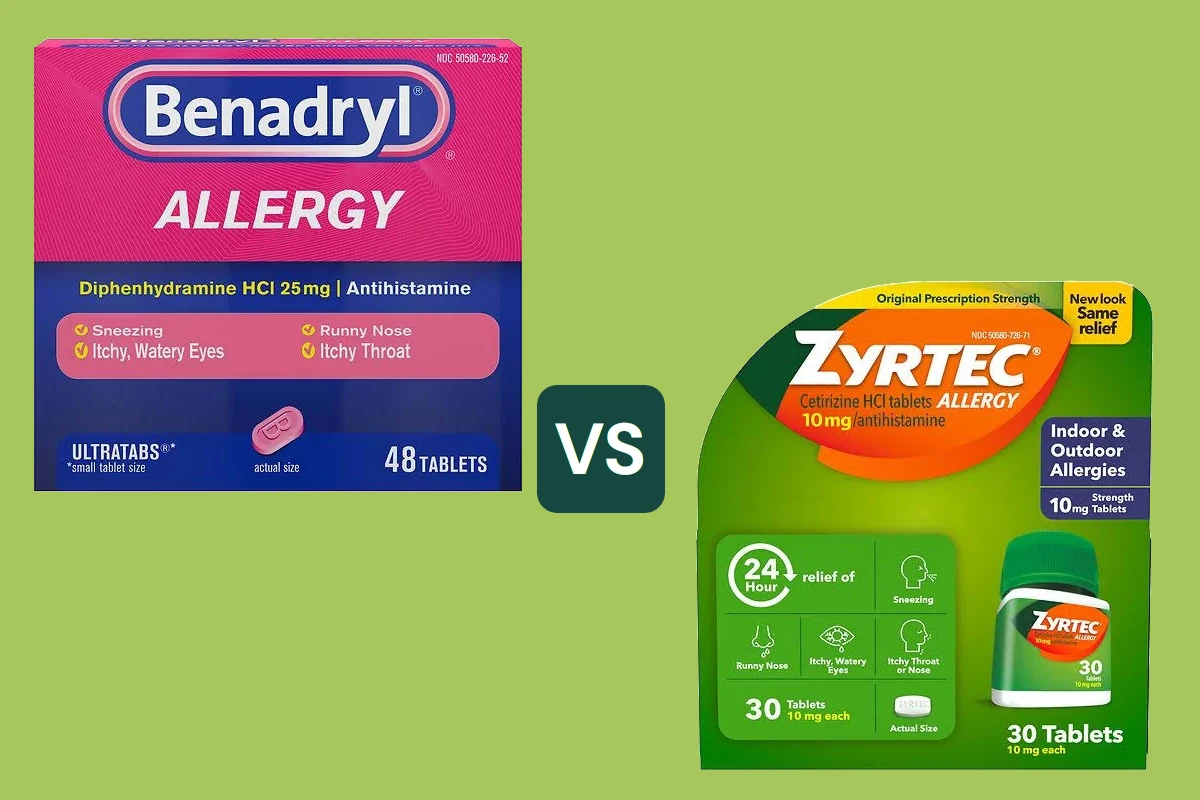
If you’ve ever reached for an antihistamine during allergy season or after breaking out in hives, you’ve probably had to choose between something like Benadryl and something like Zyrtec. Both block histamine. Both can quiet your symptoms. But they work differently, and for most people managing seasonal allergies or urticaria, one is a considerably better fit than the other.
How antihistamines work
When your immune system encounters an allergen, it triggers the release of histamine. Histamine binds to receptors in your skin, airways, and eyes, producing the symptoms you know well: itching, hives, sneezing, a runny nose, watery eyes, and in urticaria, those raised, intensely itchy welts.
Antihistamines work by blocking those receptors before histamine can bind to them. The two generations of antihistamines do this through the same basic mechanism, but with very different side effect profiles and durations.
First-generation antihistamines (like diphenhydramine or Benadryl)
First-generation antihistamines have been around since the 1940s. They cross the blood-brain barrier, which is why they cause drowsiness, and in some cases, significant sedation. Diphenhydramine, sold under the brand name Benadryl among others, is the most well-known example.
They work fast, typically within 15 to 30 minutes, but the effect wears off in four to six hours. That means multiple doses throughout the day to maintain coverage, along with ongoing sedation, dry mouth, blurred vision, and difficulty concentrating. In older adults, these anticholinergic effects can be more pronounced and carry additional risks.
For seasonal allergies or chronic urticaria, where symptoms can persist for weeks or months, that side effect profile adds up.
Second-generation antihistamines (like cetirizine or Zyrtec)
Second-generation antihistamines arrived in the 1980s and were developed specifically to reduce the CNS effects of the first generation. Cetirizine, sold as Zyrtec, is one of the most widely used. Others in the same class include loratadine (Claritin) and fexofenadine (Allegra).
These drugs cross the blood-brain barrier far less readily, so they cause little to no sedation at standard doses. They also last much longer. Cetirizine, for example, stays active for around 24 hours, meaning one daily dose provides consistent coverage without the peaks and gaps that come with repeated short-acting doses.
Why second-generation antihistamines are now the standard first-line treatment
For both seasonal allergic rhinitis and urticaria, current clinical guidelines recommend second-generation antihistamines as the first-line approach. The reasons are straightforward.
Seasonal allergies don’t resolve in an afternoon. Pollen seasons can run for weeks, and urticaria can be chronic, lasting months or longer. What patients need in those situations is reliable, day-long symptom control that doesn’t interfere with work, driving, or concentration. Second-generation antihistamines provide that. First-generation ones largely don’t.
There’s also the dosing consistency. A drug that lasts 24 hours is easier to take reliably than one requiring doses every four to six hours. Missed doses with a short-acting antihistamine mean gaps in coverage, and symptoms return quickly when histamine blockade lapses.
A few other reasons allergists prefer second-generation options for these conditions:
- Lower risk of drug interactions
- Better tolerated for long-term daily use
- Less anticholinergic burden, especially relevant for older patients
- No meaningful rebound or tolerance effect with regular use
When first-generation antihistamines still have a role
First-generation antihistamines aren’t without legitimate uses, even if they’re no longer the first choice for ongoing allergy or urticaria management.
Nighttime symptom relief. If itching or nasal symptoms are disrupting sleep, the sedating effect of diphenhydramine can be useful. Some patients take a second-generation antihistamine during the day and a first-generation one at night, though this should be discussed with a physician.
Pre-procedure use. Some allergy testing protocols involve antihistamines in specific circumstances, and a clinician may have reasons to choose one generation over another depending on timing and the patient’s recent medication history.
Acute itch from contact reactions. For sudden, short-lived itching where speed matters more than duration, a fast-acting first-generation antihistamine can provide quicker relief.
A note on dosing and children
For adults, the standard dose of cetirizine is 10mg once daily. Loratadine and fexofenadine follow similar once-daily schedules.
In children, dosing varies by age and weight. Diphenhydramine carries FDA warnings against use in children under two, and many pediatric allergists now recommend avoiding it in young children entirely outside of specific clinical guidance. Second-generation antihistamines have better-established pediatric dosing profiles and are generally preferred for children as well.
The bottom line for seasonal allergy and urticaria patients
For most people dealing with seasonal allergies or urticaria, a second-generation antihistamine like cetirizine (Zyrtec), loratadine (Claritin), or fexofenadine (Allegra) is the right starting point. They last longer, cause fewer side effects, and are much easier to sustain over the course of an allergy season or a flare of chronic hives.
First-generation antihistamines like diphenhydramine (Benadryl) have their place, but that place is increasingly specific. If you’ve been relying on them as your everyday option, it’s worth asking your allergist whether a second-generation antihistamine would serve you better.
This article is for informational purposes only and does not constitute medical advice. Always consult a qualified allergist or physician before changing your allergy management approach.