
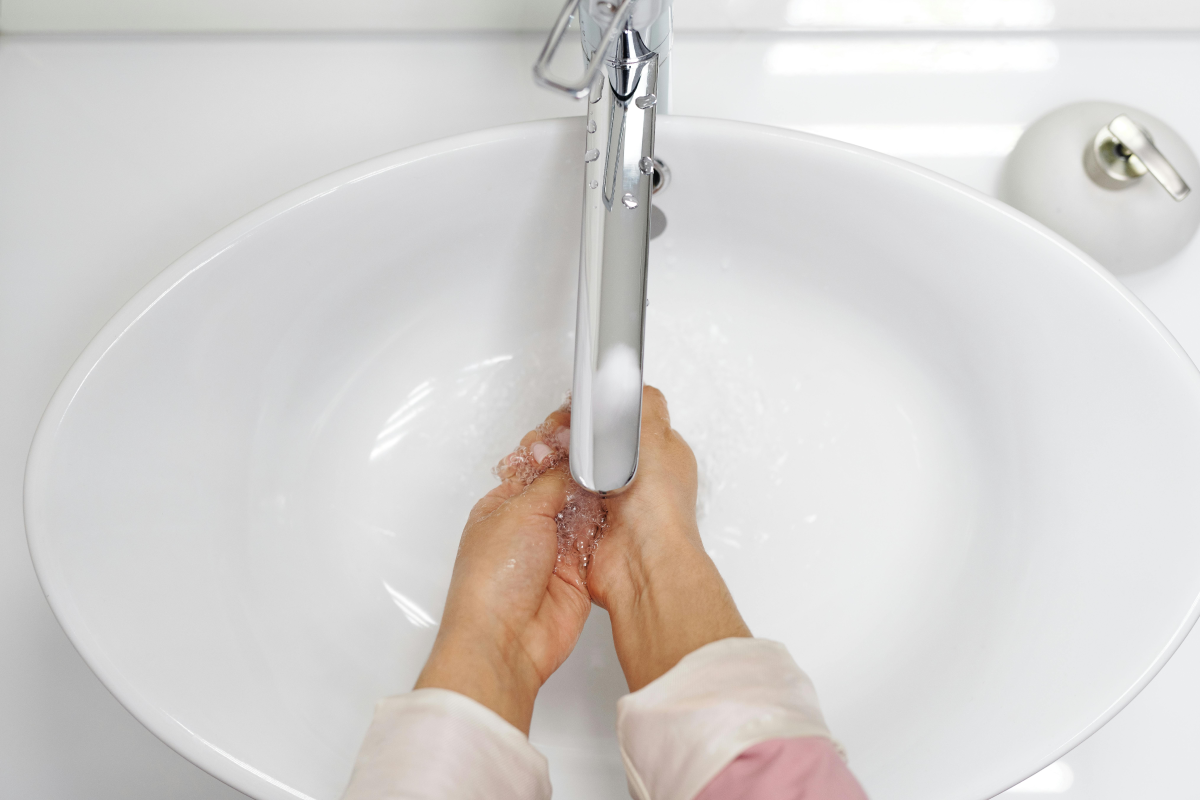
Is there such a thing as a water allergy?
Many people who experience hives, burning, or intense itching after contact with water describe their condition as a water allergy. The term makes intuitive sense, but it isn’t technically accurate. True allergic reactions involve the immune system producing IgE antibodies against a specific foreign protein. Water can’t act as an allergen in that way.
What people describing a water allergy are most likely experiencing is one of two distinct conditions: aquagenic urticaria or aquagenic pruritus. Both are real, recognized medical conditions that cause real discomfort after water contact, and both are best evaluated by an allergist or dermatologist with experience in physical hypersensitivity reactions.
What is aquagenic urticaria?
Aquagenic urticaria is a rare form of chronic inducible urticaria (CIndU) in which direct contact with water triggers hives on the skin. It’s classified as a physical urticaria, meaning the trigger is a physical stimulus rather than an ingested allergen or airborne substance.
The wheals are typically small — one to three millimeters across — surrounded by a red flare, and intensely itchy. They appear on the skin that comes into contact with water, most commonly the neck, upper trunk, and arms, and usually develop within two to fifteen minutes of exposure. Symptoms generally clear within thirty to sixty minutes after the skin dries.
The mechanism isn’t fully understood. The leading hypothesis is that water allows a water-soluble substance, possibly derived from the skin’s own sebaceous glands, to diffuse into the dermis and trigger mast cell degranulation and histamine release. This would explain why the reaction isn’t dependent on water temperature or composition — even distilled water can provoke symptoms in affected individuals.
Aquagenic urticaria is more common in women and often first appears around puberty, which has led some researchers to explore a hormonal component. It can persist for years, though spontaneous improvement has been reported.
In rare cases, individuals experience systemic symptoms including wheezing, difficulty swallowing, or lightheadedness, particularly after full-body exposure like showering or swimming. These reactions warrant prompt medical evaluation.
What is aquagenic pruritus?
Aquagenic pruritus is a related but distinct condition in which water contact triggers intense itching, burning, stinging, or tingling without producing visible hives. The absence of skin findings is what sets it apart from aquagenic urticaria — the symptoms are entirely sensory.
Itching typically begins within minutes of water contact and can last anywhere from thirty minutes to two hours. It most commonly affects the legs, feet, and trunk, and can be triggered by bathing, swimming, rain, or sweating.
Aquagenic pruritus is more common in older adults and has a recognized association with underlying systemic conditions. Most notably, it can be an early sign of polycythemia vera, a myeloproliferative disorder involving abnormal red blood cell production, as well as other blood disorders. For this reason, new-onset aquagenic pruritus, particularly in adults over forty, should be medically evaluated to rule out an underlying cause before a primary diagnosis is made.
It can also occur without any systemic condition and may be associated with dry skin, atopic dermatitis, or thyroid disease in some individuals.
Symptoms
Aquagenic urticaria:
- Small, intensely itchy wheals on water-exposed skin
- Surrounding redness
- Onset within 2 to 15 minutes of water contact
- Resolution within 30 to 60 minutes after drying
- Burning or stinging at affected sites
- In rare severe cases: wheezing, throat tightness, or dizziness
Aquagenic pruritus:
- Intense itching, burning, stinging, or prickling after water contact
- No visible hives or skin changes
- Onset within minutes of water exposure
- Duration of 30 minutes to 2 hours
- Most commonly affects legs, feet, and trunk
Both conditions can cause real anxiety around everyday activities involving water — showering, swimming, exercise-induced sweating, even rain — and have a well-documented impact on quality of life.
Diagnosis
Diagnosis is made based on clinical history and, for aquagenic urticaria, a provocation test.
Clinical history
A detailed history of when symptoms occur, their nature (hives versus itch only), duration, distribution, and any associated systemic symptoms forms the basis of diagnosis. Your physician will also review whether any underlying conditions need to be ruled out, particularly for aquagenic pruritus.
Water provocation test
For aquagenic urticaria, a standardized water provocation test can confirm the diagnosis. A wet compress at room temperature is applied to the upper body for twenty minutes and the skin is observed for wheal formation. A positive test produces characteristic small wheals at the application site within the test period.
Blood tests
Blood testing doesn’t diagnose aquagenic urticaria or pruritus directly, but may be ordered to investigate for underlying systemic conditions. A full blood count can screen for polycythemia vera and other blood abnormalities. Thyroid function and other tests may be requested depending on the clinical picture.
Differentiation from other conditions
Aquagenic urticaria must be distinguished from other forms of chronic inducible urticaria — cold urticaria, cholinergic urticaria, and heat urticaria can all produce similar symptoms during bathing or swimming. Cold urticaria is triggered by cold water specifically; cholinergic urticaria by a rise in core body temperature during exercise or hot baths; heat urticaria by warm water contact. Provocation testing can differentiate between these subtypes.
Treatment
There is no cure for aquagenic urticaria or aquagenic pruritus, but symptoms can be managed effectively in many patients.
Antihistamines
Second-generation H1 antihistamines are the first-line treatment for aquagenic urticaria. High-dose regimens — up to four times the standard dose — are sometimes needed in resistant cases under physician supervision. Consistent daily use is generally more effective than taking them on demand.
For aquagenic pruritus, antihistamines have variable results. Some patients respond well; others need alternative approaches.
Barrier creams
Applying a water-resistant emollient to the skin before water exposure can reduce symptom severity in some individuals by limiting water penetration. It works best as an adjunct to medication rather than a standalone approach.
Phototherapy
Narrowband UVB phototherapy has been reported to reduce symptoms in both conditions in some patients, though the evidence is largely based on case reports and small series. It may be considered when antihistamines aren’t sufficient.
Omalizumab
Omalizumab, a biologic medication approved for chronic spontaneous urticaria, has been used off-label with reported success in refractory aquagenic urticaria. It’s an option for patients whose symptoms aren’t controlled by antihistamines.
Sodium bicarbonate baths
Adding sodium bicarbonate (baking soda) to bath water has been reported to reduce symptoms in some individuals with aquagenic urticaria, possibly by altering the pH or ionic composition of the water at the skin surface. Evidence is anecdotal but the approach is low-risk and worth discussing with a physician.
Treatment of underlying conditions
In aquagenic pruritus associated with polycythemia vera or other systemic conditions, treating the underlying condition is central to management. Symptom resolution often follows once the primary disorder is addressed.
If you are in the NYC area and experience hives, itching, or burning after water contact, our allergists can evaluate your symptoms, confirm the diagnosis, and recommend an appropriate treatment plan. Book an appointment online or call (212) 686-6321.
Frequently asked questions
What is the difference between aquagenic urticaria and aquagenic pruritus?
Aquagenic urticaria produces visible hives on the skin after water contact. Aquagenic pruritus produces intense itching, burning, or stinging without any visible skin changes. Both are triggered by water contact and can affect quality of life, but they are distinct conditions with different associations and different treatment responses.
Is aquagenic urticaria the same as a water allergy?
Not in the strict immunological sense. A true allergy involves the immune system producing IgE antibodies against a specific foreign protein. Water can’t act as one. The mechanism in aquagenic urticaria is thought to involve water allowing a skin-derived substance to activate mast cells. It’s more accurately described as a physical hypersensitivity or inducible urticaria.
Can people with aquagenic urticaria drink water?
Yes. Aquagenic urticaria is triggered by external skin contact with water and doesn’t typically cause reactions from drinking it, as the mucous membranes of the gastrointestinal tract respond differently than skin does. Some individuals report oral symptoms with cold water ingestion, but this is uncommon and may reflect a co-existing cold urticaria rather than aquagenic urticaria.
How rare is aquagenic urticaria?
Rare, with only a few hundred cases reported in the medical literature by current estimates. Because the condition is underrecognized and many people don’t seek medical attention or receive an accurate diagnosis, the true prevalence is likely higher than published figures suggest.
Can aquagenic pruritus be a sign of something serious?
In some cases, yes. New-onset aquagenic pruritus, particularly in adults over forty, has a well-documented association with polycythemia vera, a blood disorder involving overproduction of red blood cells. It can also be associated with other myeloproliferative conditions. New-onset aquagenic pruritus should be medically evaluated rather than self-managed.
Does aquagenic urticaria go away on its own?
It tends to be chronic, but spontaneous remission has been reported. The course varies widely between individuals — some improve gradually over years, others have persistent symptoms for decades. Regular follow-up with an allergist allows treatment to be adjusted as the condition evolves.
Is aquagenic urticaria related to other forms of hives?Yes. It’s classified as a subtype of chronic inducible urticaria (CIndU), the broad category of hives triggered by specific physical stimuli. Other subtypes include cold urticaria, cholinergic urticaria, solar urticaria, pressure urticaria, and dermatographism. Some patients with aquagenic urticaria also have one or more additional CIndU subtypes, and a proportion also experience chronic spontaneous urticaria alongside their water-triggered reactions.