
Faster Diagnosis Means Faster Relief
Welcome to the Spring Edition of the NYASC Patient Newsletter
As we head into the height of allergy season, many people begin to notice the familiar return of sneezing, congestion, itchy eyes, and other allergy symptoms. Rising pollen levels can make this time of year especially challenging, but the good news is that staying informed and starting treatment early can make a big difference in how you feel.
We’re also excited to announce that we are now open select Saturdays at our Upper West Side location — making it easier than ever to fit allergy care into your schedule.
Throughout the season, our team will be sharing helpful tips, updates, and guidance to help you stay ahead of your allergies. We provide daily pollen count updates so you can better plan your day and manage your symptoms more effectively.
Follow us on social media @nyallergy for daily pollen forecasts like the one featured here, seasonal allergy tips, and the latest news from our practice. Staying connected is one of the easiest ways to keep your allergies under control this season.


Our providers went to the AAAAI conference in Philly to make sure they are up to date
Several members of our team recently traveled to Philadelphia for the 2026 AAAAI Annual Meeting — the premier national conference in allergy and immunology. Dr. Robert Lin, Dr. Justin Rashtian, Dr. Sima Patel, and Toni Santiago, PA-C attended this year’s meeting, which brought together thousands of specialists from across the country to share the latest research, treatment advances, and clinical guidelines in allergic disease, asthma, and immunology.
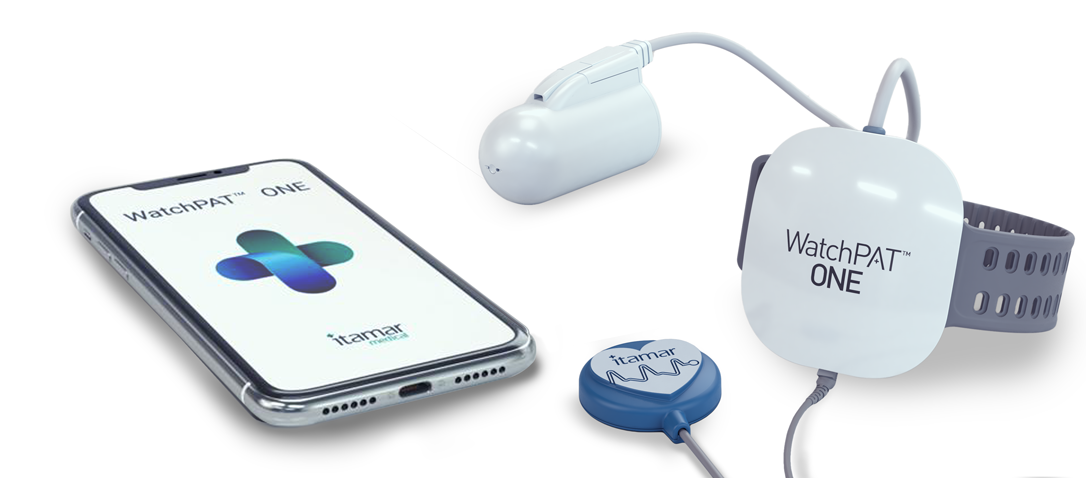
Home Sleep Study — WatchPAT ONE
Did you know that allergies and sleep are closely connected? Chronic nasal congestion, postnasal drip, and inflammation from allergic rhinitis are common contributors to disrupted sleep and obstructive sleep apnea. If you’ve been struggling with poor sleep, loud snoring, or daytime fatigue, a sleep study may be an important next step.
At NYASC, we use the WatchPAT ONE — an FDA-cleared, disposable home sleep apnea test that lets you get tested from the comfort of your own bed in a single night. No clinic visit, no complicated wiring. The device uses three simple contact points — a wrist sensor, a finger probe, and a small chest sensor — to track seven key metrics including breathing patterns, oxygen levels, heart rate, snoring, body position, and true sleep time.
Once your test is complete, the data is automatically transmitted via the WatchPAT app and reviewed by our clinical team. You’ll receive a comprehensive report with results and recommendations — and if sleep apnea is identified, we’ll discuss a treatment plan with you directly.
Ask our team at your next visit whether a home sleep study is right for you.

Remote Patient Monitoring— The Hailie Device
For our patients managing asthma, staying on top of your inhaler regimen is one of the most important things you can do — but it’s also one of the hardest. Missed doses and inconsistent technique are among the leading reasons asthma stays poorly controlled.
That’s why we now offer Remote Patient Monitoring (RPM) through the Hailie® Smartinhaler® sensor by Adherium. The Hailie sensor attaches directly to your existing inhaler without interfering with medication delivery. It automatically records every dose — including the date, time, technique quality, and inhalation data — and syncs that information to the Hailie® app on your phone.
Our clinical team can view your adherence data through a secure provider portal, allowing us to identify patterns, intervene early if needed, and tailor your treatment plan to how you’re actually using your medication.
Clinical evidence from the Hailie platform, referenced in more than 100 peer-reviewed publications, shows that inhaler tracking can increase medication adherence in adults by 59% and reduce severe asthma exacerbations by 61%. That’s a meaningful difference in both quality of life and long-term outcomes.
If you have asthma and want to take a more active role in managing your condition, ask us about enrolling in our RPM program at your next appointment.
Our Services
ADjoy study: Now Enrolling
NYASC is currently enrolling patients for the ADjoy Study, a real-world research study for people who have been prescribed lebrikizumab (EBGLYSS) for moderate-to-severe atopic dermatitis (AD).
Atopic dermatitis causes dry, itchy, and inflamed skin. Lebrikizumab works by blocking a specific protein in the body responsible for that inflammation. While lebrikizumab has been studied in clinical trials, this study is designed to understand how it performs across different patients in real-world practice — and how well it continues to work over time.
You may be eligible to participate if you:
- Are 12 years of age or older
- Have a diagnosis of moderate-to-severe AD
- Have been prescribed lebrikizumab but have not yet taken your first dose
The study runs for just over 2 years. Participants continue to see their own treating doctor as scheduled and share information about their condition and treatment at a small number of planned visits — 4 in the first year and 2 in the second year. Participation is completely voluntary and you can withdraw at any time.
About 400 patients will participate nationally. This study has been reviewed and approved by an Institutional Review Board (IRB).
To learn more or find out if you’re eligible, speak with your provider at your next visit or contact our team directly.

FDA drops age limit on Neffy
Big news for families managing severe allergies: the FDA has removed the minimum age requirement for neffy® 1 mg, the needle-free epinephrine nasal spray used to treat anaphylaxis. Previously, children had to be at least 4 years old to receive the 1 mg dose. The updated label now allows any patient weighing between 33 and 66 pounds to use the nasal spray regardless of age Respiratory Therapy — a major step forward for families of younger children who meet the weight criteria.
About one quarter of patients who fall in that 33-to-66-pound weight range are under the age of 4 Respiratory Therapy, meaning many families had been waiting on the sidelines for this change.
The practical takeaway: if your young child has been prescribed epinephrine but you’ve had concerns about needle-based auto-injectors, neffy may now be an option worth discussing with your provider. Dosing is based strictly on weight — the 1 mg dose covers patients between approximately 33 and 66 pounds, while the 2 mg dose is recommended for those weighing 66 pounds or more.