What Is a Ragweed Allergy?
Ragweed allergy is an immune-mediated reaction triggered by the pollen released by ragweed plants (Ambrosia species) during their late summer and fall flowering season. It is the single most common cause of seasonal allergic rhinitis in the United States, affecting an estimated 23 million Americans. In New York City and the broader Northeast, ragweed season typically runs from mid-August through October, with peak pollen levels occurring in early to mid-September.
Ragweed is a widespread weed that grows readily in disturbed soils, roadsides, vacant lots, and urban green spaces — including throughout the five boroughs. A single ragweed plant can produce up to one billion pollen grains over the course of a season, and ragweed pollen is lightweight enough to travel hundreds of miles on the wind. This means that even individuals living in densely urban environments with no ragweed plants nearby are regularly exposed to significant pollen concentrations during peak season.
When a sensitized individual inhales ragweed pollen, the immune system produces IgE antibodies against its proteins. The primary allergen is Amb a1, a protein found in the outer coat of the pollen grain. On subsequent exposures, these antibodies trigger mast cells to release histamine and other inflammatory mediators, producing the hallmark symptoms of allergic rhinitis, conjunctivitis, and in some individuals, asthma.
Ragweed is a member of the Asteraceae (daisy or composite) family, which also includes sunflowers, chamomile, chrysanthemums, marigolds, and echinacea. Individuals sensitized to ragweed may cross-react with other members of this plant family, including some herbal teas and supplements derived from Asteraceae plants. Notably, as discussed below, ragweed pollen also shares structural similarities with proteins in a number of raw foods, leading to pollen-food allergy syndrome in a significant proportion of ragweed-allergic individuals.
Ragweed Allergy Symptoms
Ragweed allergy produces a characteristic cluster of upper respiratory, ocular, and sometimes lower respiratory symptoms that appear each year during late summer and fall. Symptoms include:
- Frequent sneezing
- Runny nose
- Nasal congestion
- Itchy, watery, or red eyes
- Itchy throat, ears, or roof of the mouth
- Post-nasal drip
- Coughing
- Fatigue and difficulty sleeping
- Worsening of asthma symptoms, including wheezing and chest tightness
- Dark circles under the eyes (allergic shiners)
- Puffiness around the eyes
Symptoms that occur consistently from late August through October and resolve when the first frost arrives are a strong clinical indicator of ragweed allergy. The first hard frost of the season typically ends ragweed pollen release, providing rapid symptom relief for affected individuals.
Foods That Cross-React With Ragweed
A significant proportion of ragweed-allergic individuals — estimated at around 50 to 75 percent — experience pollen-food allergy syndrome (PFAS) when eating certain raw foods. This occurs because the immune system cross-reacts between ragweed pollen proteins and structurally similar proteins found in particular foods. Symptoms are typically mild and confined to the mouth and throat — tingling, itching, or brief swelling — and usually resolve within minutes.
Foods commonly associated with cross-reactivity in ragweed-allergic individuals include:
- Banana
- Cantaloupe and honeydew melon
- Watermelon
- Zucchini and cucumber
- Sunflower seeds
- Chamomile tea
- Echinacea supplements
- Peach
- Tomato
Cooking or heating these foods typically destroys the cross-reactive proteins, so cooked or canned versions are usually tolerated without issue. Reactions to these foods tend to be more pronounced during peak ragweed season when overall allergen burden is highest.
Ragweed Allergy Diagnosis
Skin Prick Test
A skin prick test is the most commonly used diagnostic tool for ragweed allergy. A small amount of ragweed pollen extract is applied to the forearm or back and the skin is lightly pricked. A raised, itchy wheal developing at the site within 15–20 minutes indicates sensitization. Skin prick testing is fast, reliable, and can test for multiple allergens simultaneously, allowing your allergist to assess the full picture of your seasonal sensitivities.
Blood Test
A blood test measuring specific IgE antibodies to ragweed pollen — and to the Amb a1 protein specifically — can confirm sensitization and provide additional detail about the degree of reactivity. Blood testing is a useful alternative when skin testing is not appropriate, such as in individuals with severe eczema or those taking medications that interfere with skin test results.
Clinical History
A detailed symptom history is central to diagnosing ragweed allergy. Symptoms that begin reliably in mid-August, peak in September, and resolve with the first frost are highly characteristic. Your allergist will also ask about any oral symptoms following consumption of cross-reactive foods, which can further support the diagnosis.
Ragweed Allergy Treatment
Antihistamines
Oral antihistamines are commonly used to relieve sneezing, itching, runny nose, and eye symptoms during ragweed season. Second-generation antihistamines are preferred for daily use as they are less sedating. Starting antihistamines one to two weeks before ragweed season begins can help establish a baseline of symptom control before pollen levels rise.
Nasal Corticosteroids
Intranasal corticosteroid sprays are the most effective daily medication for managing ragweed-induced allergic rhinitis. They work by reducing nasal inflammation and are most effective when used consistently throughout the season rather than on an as-needed basis. Beginning treatment before ragweed season starts is recommended for best results.
Eye Drops
Antihistamine or mast cell stabilizing eye drops can provide targeted relief for ocular symptoms including itching, redness, and watering during ragweed season.
Leukotriene Receptor Antagonists
Medications such as montelukast can be used alone or in combination with antihistamines and nasal corticosteroids to manage ragweed allergy symptoms, particularly in individuals who also have asthma.
Allergen Immunotherapy
Allergy immunotherapy is the only treatment that modifies the underlying immune response to ragweed rather than simply managing symptoms. Through a program of gradually increasing allergen exposure — delivered as allergy shots or sublingual drops — the immune system is desensitized to ragweed pollen over time. Immunotherapy typically requires a multi-year commitment but can produce lasting reductions in symptom severity and medication need, and has been shown to decrease pollen-food allergy syndrome reactions as well.
Pollen Avoidance
While complete avoidance of ragweed pollen in an urban environment is not practical, certain measures can reduce exposure during peak season: keeping windows closed and using air conditioning, showering after spending time outdoors, wearing wraparound sunglasses outside, changing clothes after outdoor activity, and monitoring daily pollen counts through local weather services or the American Academy of Allergy, Asthma and Immunology’s pollen tracker.
If you experience seasonal symptoms in late summer and fall, our NYC allergists can confirm whether ragweed is the cause and build a treatment plan tailored to your needs. Book an appointment online or call (212) 686-6321.
Ragweed Allergy Frequently Asked Questions
When Is Ragweed Season in New York?
Ragweed season in New York typically begins in mid-August, peaks in early to mid-September, and ends with the first hard frost — usually in October. Warmer fall temperatures can extend the season. Pollen counts are generally highest on warm, dry, windy days and lowest after rain or on cool, still days.
How Far Does Ragweed Pollen Travel?
Ragweed pollen is extremely lightweight and can be carried by wind for up to 400 miles from its source. This means that individuals living in urban areas with little nearby vegetation are still exposed to significant concentrations of ragweed pollen during peak season. Living in a city does not provide meaningful protection from ragweed pollen.
Can Ragweed Allergy Cause Asthma?
Yes. Ragweed pollen is a recognized trigger for allergic asthma, and many individuals with both asthma and ragweed sensitization experience significant worsening of respiratory symptoms during fall pollen season. Effective treatment of the underlying ragweed allergy — particularly through immunotherapy — can help reduce asthma flares.
Is Ragweed Related to Goldenrod?
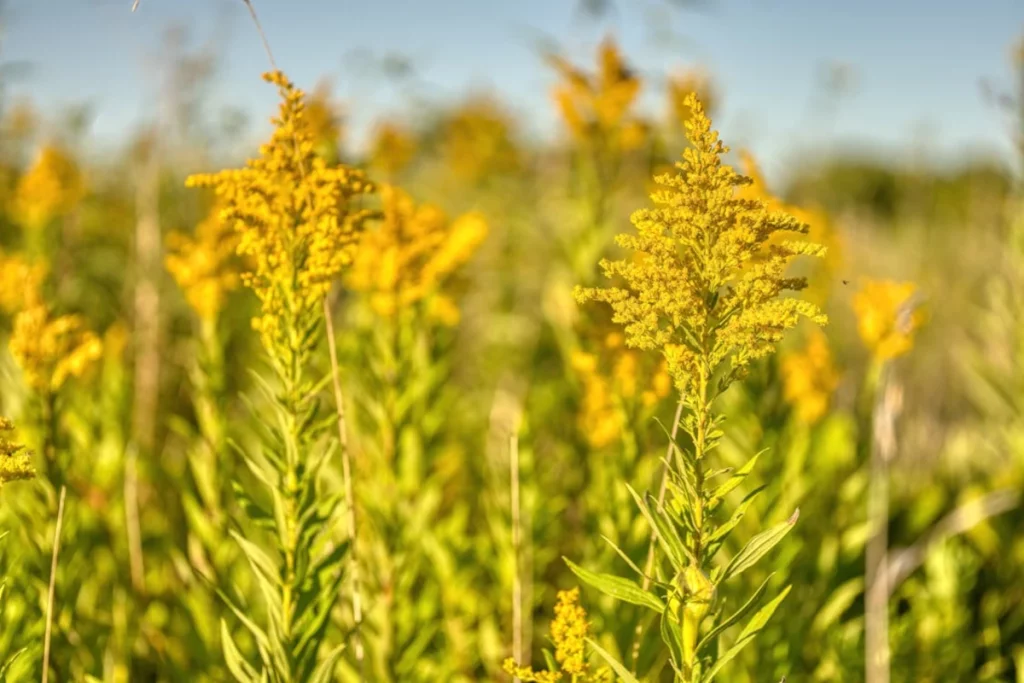
Ragweed and goldenrod bloom at the same time in late summer and fall, and goldenrod is often incorrectly blamed for fall allergies because its bright yellow flowers are highly visible. However, goldenrod pollen is heavy and sticky, designed for insect pollination rather than wind dispersal, making it rarely inhaled in significant quantities. Ragweed, which blooms simultaneously but is far less conspicuous, is the true culprit in the vast majority of fall allergy cases.
What Is the Difference Between Ragweed Allergy and a Cold?
Ragweed allergy and the common cold share several symptoms including runny nose, congestion, and fatigue. Key differences include the duration of symptoms — colds typically resolve within 7 to 10 days while ragweed symptoms persist throughout the entire pollen season — and the nature of nasal discharge, which tends to be clear and watery in allergic rhinitis and thicker in a cold. Fever is a sign of infection, not allergy. Itching of the eyes, nose, and throat is characteristic of allergy rather than cold.
Can Ragweed Allergy Develop in Adulthood?
Yes. While allergies often first appear in childhood or young adulthood, it is possible to develop ragweed allergy at any age, including in middle age or later life. New-onset seasonal symptoms in adults that consistently appear in late summer and fall should be evaluated by an allergist regardless of whether allergies were previously identified.
Is Ragweed Allergy Related to Other Plant Allergies?
Ragweed belongs to the Asteraceae family, which includes plants such as chamomile, chrysanthemums, marigolds, sunflowers, and echinacea. Individuals sensitized to ragweed may react to these related plants or to herbal products derived from them. Ragweed does not share significant cross-reactivity with tree pollens such as birch or with grass pollens, though some individuals are sensitized to multiple pollen types across different seasons.