
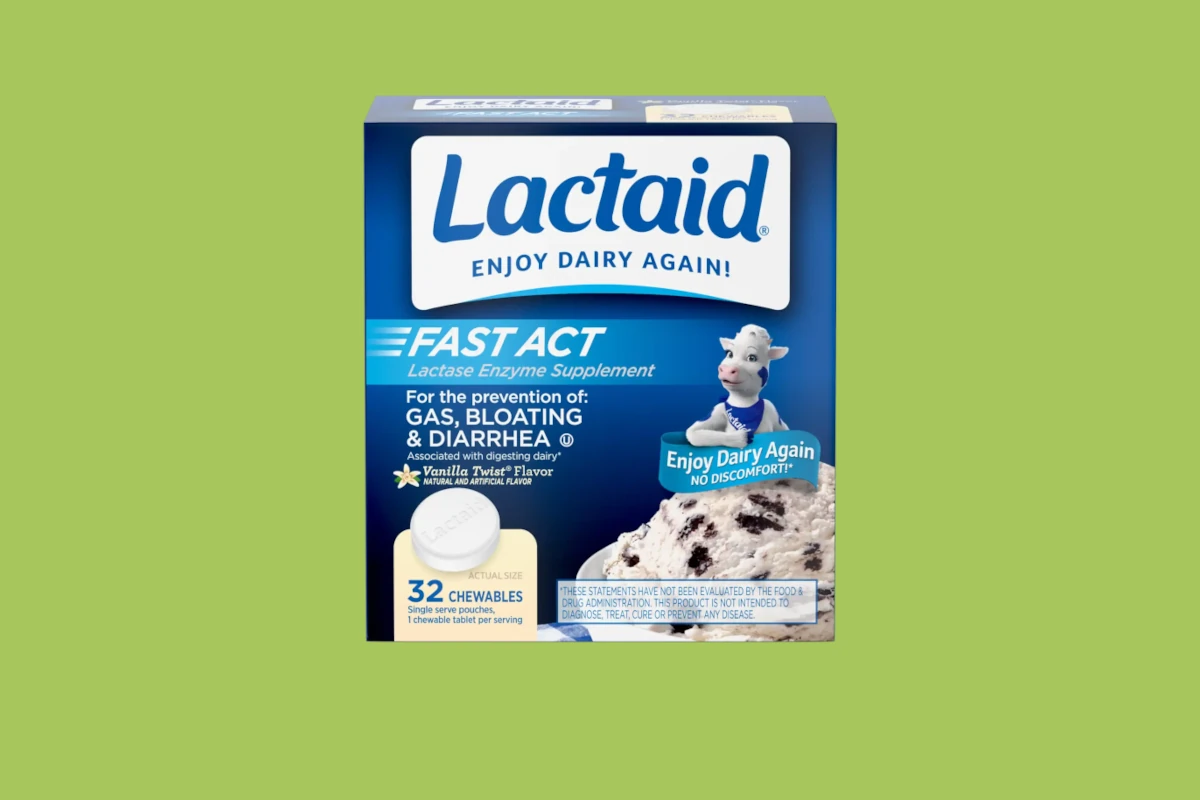
Lactase enzyme pills are the go-to for lactose intolerance, and for many people, they work well. But if you’re still getting symptoms after popping a Lactaid before every dairy-containing meal, you have options. The problem is rarely that dairy is entirely off-limits — it’s usually about load, timing, and finding what your gut can actually handle.
Here’s what to consider when the pills aren’t cutting it.
Reduce the load rather than just block it
Lactase pills work better when there’s less lactose to process. Large amounts of dairy in one sitting can overwhelm the enzyme, even with supplementation.
A few things worth trying:
- Spread dairy across the day in smaller portions rather than having it all at once
- Switch to hard-aged cheeses — cheddar, parmesan, and Swiss have very little lactose left after the aging process, and many people who struggle with milk tolerate them without any symptoms at all
- Try butter and ghee, both of which are nearly lactose-free
- Reach for full-fat dairy over low-fat — this sounds counterintuitive, but fat slows gastric emptying, which gives your body more time to process lactose before it reaches the colon
Switch the dairy itself
Sometimes the fix is changing what you’re drinking rather than how much you take before you drink it.
Lactose-free milk (Lactaid brand, not the pills) already has the enzyme added. Some people find this more reliable because the enzyme is already in contact with lactose before it reaches your gut, rather than relying on the timing of a pill.
A2 milk is worth trying if Lactaid milk hasn’t fully solved the problem. Some people’s symptoms are actually driven by a protein called A1 beta-casein, not lactose itself. A2 milk removes that variable.
Goat or sheep milk has a slightly different lactose structure, and some people tolerate it better than cow’s milk, though the evidence here is more anecdotal than clinical.
Add probiotics
This is one that most people overlook. Two strains in particular — Lactobacillus acidophilus and Bifidobacterium longum — have decent evidence supporting their ability to improve lactose digestion over time. They won’t replace the lactase enzyme, but regular use can gradually reduce symptoms.
Yogurt with live active cultures is often tolerated even by people with lactose intolerance. The bacteria in the yogurt pre-digest a significant portion of the lactose during fermentation, so by the time you eat it, there’s less lactose to process.
Check whether it’s actually lactose
If you’ve cut out all dairy and still have symptoms, lactose may not be the only thing going on — or it may not be the problem at all. Conditions like IBS, SIBO (small intestinal bacterial overgrowth), a dairy protein allergy, or sensitivities to fructose, gluten, or FODMAPs can cause very similar symptoms.
One useful indicator: if your symptoms show up 4 to 6 hours after eating, that can suggest fermentation happening deeper in the gut — more consistent with SIBO than standard lactase deficiency, which typically causes symptoms within 30 minutes to two hours.
Keeping a food diary is one of the better ways to spot these patterns, particularly if your symptoms are inconsistent or seem to appear even with foods that shouldn’t contain much lactose.
When to see a doctor
If your symptoms are severe, include significant bloating or pain, or don’t improve even after removing dairy entirely, it’s worth getting evaluated. Celiac disease, inflammatory bowel disease, and SIBO can all mimic or worsen lactose intolerance, and they each require different treatment.
The allergy and immunology team at NY Allergy & Sinus Centers can help figure out whether what you’re dealing with is lactose intolerance, a dairy protein allergy, or something else entirely. Call us at (212) 686-6321 to schedule an appointment.