
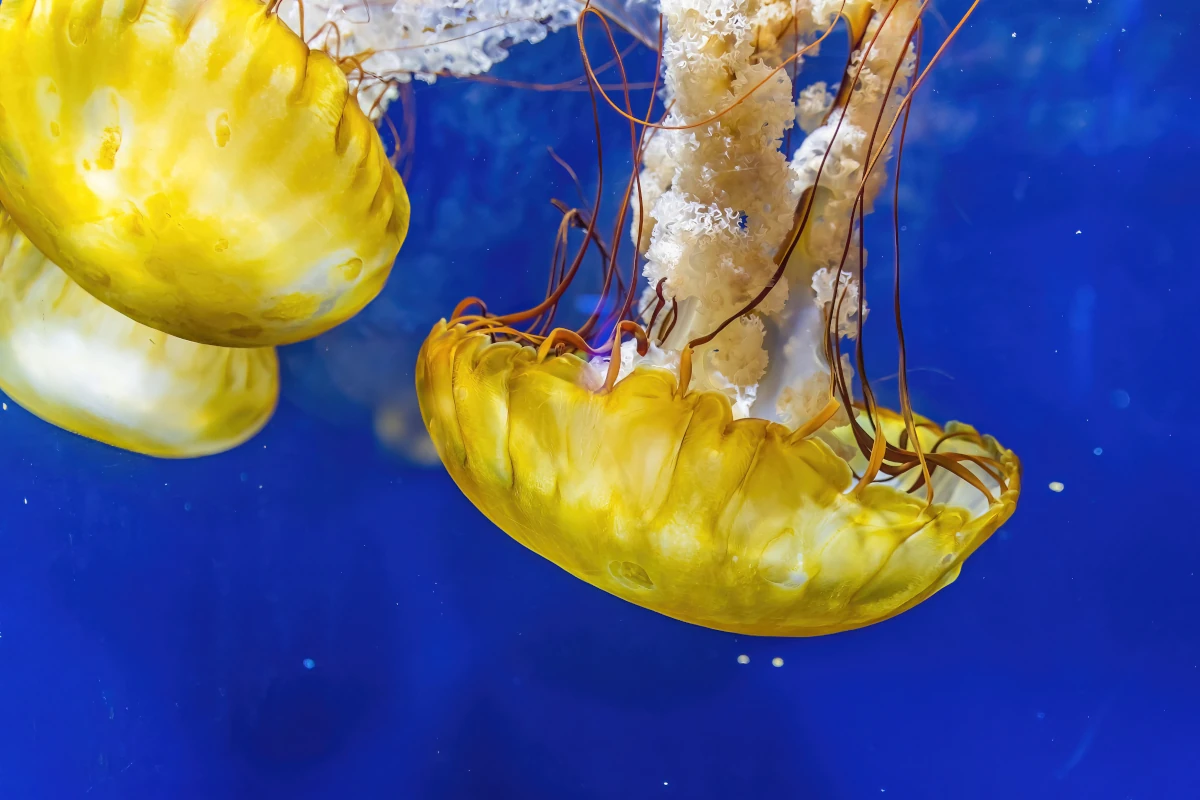
Are jellyfish sting reactions always allergic?
Many people who experience an unusually severe or distressing reaction to a jellyfish sting describe it as a jellyfish allergy. In most cases, however, what they are experiencing is a toxic reaction to jellyfish venom rather than a true immune-mediated allergic response. Understanding the difference matters — both for managing the immediate reaction correctly and for determining whether formal allergy evaluation is needed afterward.
Jellyfish deliver venom through microscopic stinging structures called nematocysts, which are embedded in their tentacles and fire on contact with skin. The venom contains a complex mixture of toxins, proteases, phospholipases, and other biologically active proteins that cause pain, inflammation, and skin damage through direct toxic mechanisms in virtually anyone who is stung. This toxic reaction is not an allergy — it does not require prior sensitization or immune involvement, and it can occur on a first-ever jellyfish sting.
True IgE-mediated allergic reactions to jellyfish venom proteins do exist but are considerably rarer than the standard toxic sting reaction. They occur in individuals who have been previously sensitized to jellyfish venom proteins — typically through a prior sting — and who mount an immune response on re-exposure that goes beyond what the venom’s direct toxic effects would explain. True jellyfish venom allergy can cause anaphylaxis and requires formal medical evaluation and ongoing management including epinephrine prescription.
A third category — hypersensitivity reactions that are more severe than a typical sting but not clearly IgE-mediated — also exists and represents an intermediate clinical picture that an allergist can help characterize.
How jellyfish stings work
When a jellyfish tentacle contacts skin, thousands of nematocysts fire simultaneously, injecting venom directly into the skin. The venom causes immediate local pain, burning, and redness through its direct toxic and inflammatory effects. In most individuals the reaction remains localized to the sting site — a red, itchy, or blistered wheal pattern following the line of tentacle contact — and resolves over hours to days.
Species-related differences in venom composition and concentration mean that some jellyfish cause significantly more severe toxic reactions than others. The box jellyfish (Chironex fleckeri) found in Australian and Indo-Pacific waters produces one of the most potent animal venoms known and can cause life-threatening cardiotoxic effects through direct toxic mechanisms entirely independent of allergy. The Portuguese man o’ war (Physalia physalis) — which is not a true jellyfish but a siphonophore — is encountered off the northeastern US coastline including around New York and produces painful stings with significant systemic toxic potential. The moon jellyfish (Aurelia aurita) commonly found in New York Harbor and surrounding waters produces milder stings in most individuals.
Toxic sting reaction versus true allergic reaction
Distinguishing a severe toxic sting reaction from a true allergic reaction can be challenging because the symptoms overlap, but certain features point toward one or the other.
Features more consistent with a toxic reaction:
- First-ever jellyfish sting producing significant symptoms
- Symptoms confined to or clearly centered around the sting site
- Pain and burning as the dominant symptoms
- Reaction severity proportional to the size of the jellyfish, the length of tentacle contact, and the species involved
- Systemic symptoms including nausea, muscle cramps, or cardiovascular effects following contact with a highly venomous species
Features more consistent with a true allergic reaction:
- Prior jellyfish stings that were tolerated without severe systemic reaction
- Systemic symptoms — hives away from the sting site, throat swelling, wheezing, or anaphylaxis — disproportionate to the size or species of jellyfish involved
- Rapid onset of widespread urticaria or angioedema following a sting
- Symptoms consistent with anaphylaxis including drop in blood pressure, loss of consciousness, or severe breathing difficulty
Symptoms
Typical toxic sting symptoms (most people):
- Immediate pain, burning, and stinging at the sting site
- Redness and inflammation following the tentacle contact pattern
- Itching or numbness at the sting site
- Wheal formation along the sting line
- Blistering in more severe stings
- Nausea or vomiting
- Headache
- Muscle cramps with extensive stings
Systemic toxic symptoms (severe stings or highly venomous species):
- Muscle pain and spasm
- Difficulty breathing
- Cardiovascular effects including abnormal heart rhythm
- Loss of consciousness (in extreme cases involving highly venomous box jellyfish)
True allergic reaction symptoms:
- Widespread hives beyond the sting site
- Swelling of the lips, tongue, or face (angioedema)
- Throat tightening or difficulty swallowing
- Wheezing or significant breathing difficulty
- Dizziness or lightheadedness
- Drop in blood pressure
- Anaphylaxis
Delayed reactions:
- Some individuals develop a delayed inflammatory reaction at the sting site 1 to 2 weeks after the initial sting — a raised, itchy nodule or linear lesion at the site of nematocyst penetration. This is a delayed hypersensitivity or granulomatous reaction rather than an immediate allergy and typically resolves spontaneously.
Immediate management of a jellyfish sting
Regardless of whether the reaction is toxic or allergic, immediate first aid is the priority for any jellyfish sting.
For most jellyfish stings:
- Remove any visible tentacle material carefully without touching it directly — use a card, stick, or gloved hand to scrape away rather than rubbing, which can trigger additional nematocysts to fire
- Rinse the sting site with seawater — not fresh water, which can cause remaining nematocysts to fire and worsen the reaction
- Immersion in hot water at the maximum tolerable temperature (around 45°C / 113°F) for 20 minutes has good evidence for reducing pain in most jellyfish stings by denaturing heat-labile venom proteins
- Topical lidocaine or commercial sting inhibitor products may help manage local pain
- Avoid rubbing the sting site
- Oral antihistamines and topical corticosteroids can help manage local itching and inflammation
Seek emergency care immediately if:
- Symptoms of anaphylaxis develop — throat tightening, significant breathing difficulty, widespread hives, loss of consciousness, or drop in blood pressure
- The sting involves a large area of the body or the face and neck
- There is any suspected box jellyfish involvement
- Cardiovascular or severe respiratory symptoms develop
For individuals with known jellyfish venom allergy:
- Use epinephrine auto-injector immediately at the first signs of a systemic allergic reaction and call emergency services
Diagnosis
Clinical history
A detailed history is the starting point for evaluating whether a jellyfish sting reaction reflects true allergy or a toxic response. Your allergist will review the circumstances of the sting, the species of jellyfish involved where known, the nature and distribution of symptoms, whether prior stings were tolerated without systemic reaction, and whether the systemic symptoms experienced were proportionate to the size and severity of the sting.
Skin testing and blood testing
Skin prick testing and specific IgE blood testing for jellyfish venom allergens can be performed in specialist settings, though standardized commercial testing reagents for jellyfish venom are not as widely available as those for insect venom allergens. Testing is most informative in individuals who have experienced clearly systemic reactions disproportionate to their sting exposure, where confirming IgE sensitization would guide management decisions including epinephrine prescription.
Differentiation from insect venom allergy
Jellyfish venom allergy is distinct from insect sting allergy — the venoms are chemically unrelated and there is no cross-reactivity between the two. A history of reactions to bee or wasp stings does not predict jellyfish venom reactivity, and vice versa.
Treatment
Avoidance
For individuals with confirmed or suspected jellyfish venom allergy, avoiding jellyfish-inhabited waters is the most effective risk reduction strategy. Practical measures include:
- Checking local beach advisory and jellyfish warning systems before swimming — many coastal areas including Long Island and New Jersey beaches post jellyfish alerts during bloom periods
- Wearing a full-body swimsuit or wetsuit when swimming in areas where jellyfish are present, which provides a physical barrier against nematocyst contact
- Avoiding swimming during jellyfish bloom conditions — warm, calm, onshore wind conditions tend to concentrate jellyfish near beaches
- Using commercially available jellyfish sting inhibitor lotions, which form a barrier on the skin that can reduce nematocyst adhesion and firing
Antihistamines
Oral antihistamines can help manage local itching, hives, and mild systemic symptoms following a jellyfish sting. Antihistamines can be given after epinephrine administration to help block the histamine-mediated portion of an allergic reaction. They should not be depended on as a standalone treatment in the event of a severe systemic or anaphylactic reaction.
Topical and oral corticosteroids
Topical corticosteroid creams can help reduce inflammation and itching at the sting site. Oral corticosteroids may be prescribed for more significant local reactions or delayed hypersensitivity responses at the sting site.
Epinephrine
Individuals with confirmed jellyfish venom allergy or a history of systemic allergic reactions to jellyfish stings should carry an epinephrine auto-injector (such as an EpiPen, Auvi-Q, or neffy intranasal epinephrine) whenever engaging in water activities where jellyfish exposure is possible. Epinephrine is the first-line emergency treatment for anaphylaxis and should be used at the first sign of a severe systemic reaction, followed immediately by calling emergency services.
Venom immunotherapy
Venom immunotherapy — the desensitization treatment used highly effectively for bee and wasp venom allergy — has not been established for jellyfish venom due to the limited availability of standardized jellyfish venom extracts and the relative rarity of confirmed true jellyfish venom allergy. Management therefore focuses on avoidance and emergency preparedness rather than desensitization.
If you are in the NYC area and have experienced a systemic reaction to a jellyfish sting that you believe may represent a true allergic response rather than a typical toxic reaction, our allergists can evaluate your symptoms and determine appropriate management. Book an appointment online or call (212) 686-6321.
Frequently asked questions
How do I know if my jellyfish sting reaction was an allergy or just a normal response?
The key distinguishing feature is whether your systemic symptoms — hives away from the sting site, throat swelling, wheezing, or anaphylaxis — were disproportionate to the size and severity of the sting itself. Most people stung by a jellyfish experience significant local pain and inflammation, and sometimes nausea or headache, through direct toxic mechanisms. Widespread hives, throat tightening, breathing difficulty, or loss of blood pressure following a relatively minor sting point more strongly toward a true allergic reaction. An allergist can help characterize the reaction type based on your history.
Is a Portuguese man o’ war sting the same as a jellyfish sting?
The Portuguese man o’ war is not technically a jellyfish but a colonial siphonophore with similar nematocyst-based stinging mechanisms. Its venom is potent and can cause significant systemic toxic effects — including severe pain, cardiovascular effects, and respiratory distress — through direct toxicity in anyone stung, regardless of allergy. Man o’ war stings encountered off the northeastern US coast, including Long Island and New Jersey shores, should be taken seriously and monitored for systemic symptoms.
Should I use vinegar on a jellyfish sting?
The vinegar recommendation is species-specific and not universally appropriate. Vinegar is recommended for box jellyfish stings to inhibit nematocyst firing, but for the types of jellyfish most commonly encountered in northeastern US waters — including moon jellyfish and lion’s mane — vinegar may actually trigger additional nematocyst firing and worsen the reaction. Hot water immersion has better general evidence for pain relief across most jellyfish species. When in doubt, rinse with seawater rather than fresh water or vinegar unless the specific species is known to be a box jellyfish.
Can I develop jellyfish allergy from a single sting?
Sensitization — the development of IgE antibodies that could cause an allergic reaction on future exposure — can theoretically occur after a first sting. However, a first-ever sting producing severe systemic symptoms is more likely to reflect a direct toxic reaction, particularly if a large area was stung or a potent species was involved, than a pre-existing true allergy. The allergic pattern more typically involves prior stings that were tolerated followed by a more severe systemic reaction on subsequent exposure.
Do I need to carry an EpiPen after a severe jellyfish sting reaction?
If your reaction involved systemic symptoms beyond the sting site — particularly hives, throat swelling, or anaphylaxis — an epinephrine auto-injector prescription is worth discussing with an allergist. Whether true IgE-mediated sensitization has occurred can be assessed through allergy testing. Given that future jellyfish encounters in open water are unpredictable, carrying epinephrine is a reasonable precaution for anyone who has experienced a systemic reaction to a jellyfish sting, particularly if they regularly swim in coastal waters.
Are jellyfish more common in New York waters at certain times of year?
Yes. Jellyfish populations in New York coastal waters — including Long Island Sound, the waters around Long Island’s south shore, and nearby New Jersey beaches — tend to peak in summer, particularly from July through September. Moon jellyfish are the most commonly encountered species in these waters and produce relatively mild stings in most individuals. Lion’s mane jellyfish, which produce more significant stings, are also present in northeastern waters, particularly in cooler months. Portuguese man o’ war are occasionally carried into northeastern waters by warm Gulf Stream currents, particularly in late summer.