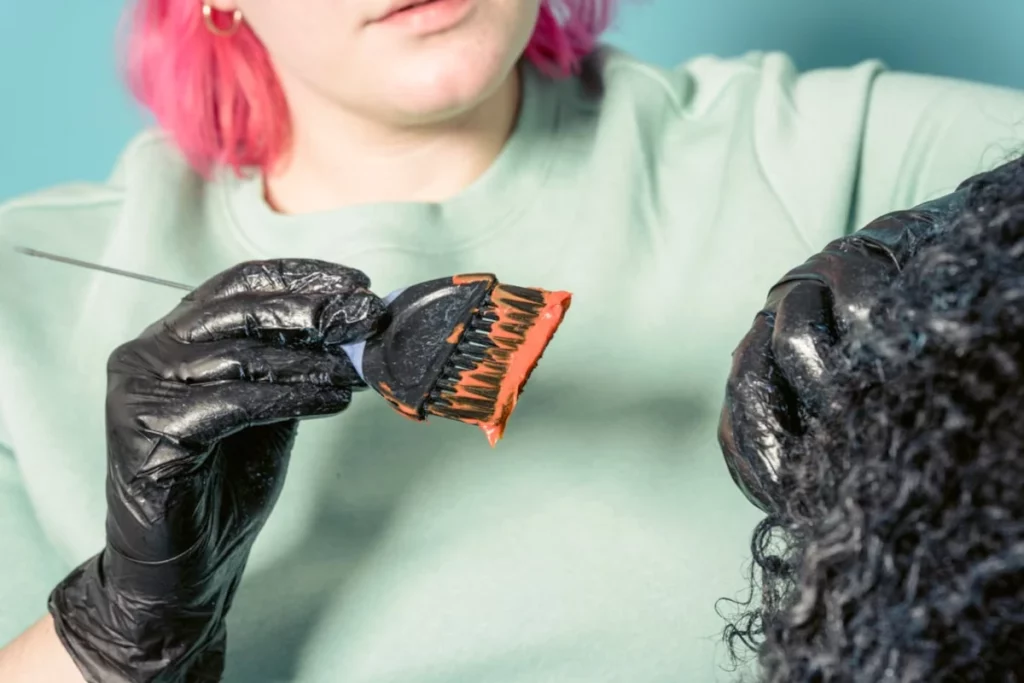
What is a hair dye allergy?
Hair dye allergy is a hypersensitivity reaction triggered by chemical compounds in permanent and semi-permanent hair dyes. It is one of the most common causes of allergic contact dermatitis and a frequently encountered condition in allergy and dermatology practice. Reactions range from localized scalp irritation to severe facial swelling and, in rare cases, systemic anaphylaxis — making it a condition that warrants proper medical evaluation rather than self-management.
The overwhelming majority of hair dye allergic reactions are caused by a single compound: para-phenylenediamine, universally abbreviated as PPD. PPD is the primary oxidative dye base used in virtually all permanent hair color products and most semi-permanent dyes. It is valued in the hair industry for its ability to produce rich, lasting color across a wide range of shades, but it is also one of the most potent contact sensitizers in widespread consumer use. Once an individual becomes sensitized to PPD, repeated exposure produces progressively stronger reactions, and sensitization is generally considered lifelong.
PPD belongs to the para-amino chemical group, and sensitization to it predicts cross-reactivity with a wide range of structurally related compounds encountered in other products and settings. This cross-reactivity network is one of the reasons hair dye allergy has implications well beyond the scalp — individuals sensitized to PPD may subsequently react to local anesthetics, certain medications, sunscreen chemicals, rubber chemicals, and azo dyes used in foods and textiles.
Hair dye allergy is a Type IV delayed hypersensitivity reaction — also known as allergic contact dermatitis — meaning it does not involve IgE antibodies and does not produce immediate reactions in the way classic food allergies do. Symptoms typically develop 24 to 72 hours after dye application rather than within minutes, which is why many individuals do not initially connect their symptoms to the hair dye. With repeated exposure and increasing sensitization, the reaction onset can become faster.
In rare cases, hair dye allergy can trigger an immediate IgE-mediated reaction with rapid onset of hives, swelling, and anaphylaxis. These cases most commonly involve occupational hairdresser exposure or individuals with very high degrees of sensitization.
PPD and related chemical allergens
Para-phenylenediamine (PPD) is present in:
- Virtually all permanent hair dyes
- Most semi-permanent oxidative hair dyes
- Some temporary black henna tattoos — a significant sensitization route, particularly in children and young adults who receive black henna tattoos during travel
- Dark eyebrow and eyelash dyes
- Some textile dyes
Para-toluenediamine (PTD or PTDA) is a structurally related compound used in some hair dyes marketed as PPD-free alternatives. While PTD produces less sensitization than PPD in some individuals, cross-reactivity between PPD and PTD is common and PPD-allergic individuals should not assume PTD-based products are safe without allergist guidance.
Cross-reactive compounds in the para-amino group that may cause reactions in PPD-sensitized individuals include:
- Benzocaine and other ester local anesthetics
- Procaine
- PABA-based sunscreens (para-aminobenzoic acid)
- Sulfonamide antibiotics
- Azo dyes in foods, textiles, and cosmetics
- Rubber accelerators (thiurams, carbamates)
- Some anti-inflammatory medications
Symptoms
Hair dye allergy symptoms reflect the delayed hypersensitivity mechanism and typically appear 24 to 72 hours after dye application, though with progressive sensitization the reaction onset may occur sooner.
Localized contact dermatitis symptoms:
- Redness, itching, and swelling of the scalp
- Itching, burning, or stinging along the hairline, forehead, and behind the ears — areas of highest dye contact
- Blistering or weeping skin lesions on the scalp or hairline
- Dry, thickened, or scaling skin with repeated reactions
- Swelling of the eyelids
Severe reactions:
- Significant facial and neck swelling
- Swelling of the eyelids severe enough to close the eyes
- Swelling extending to the ears and neck
- Scalp swelling and tenderness
Rare immediate reactions:
- Rapid onset hives
- Throat tightening
- Wheezing
- Anaphylaxis
The face and hairline are disproportionately affected relative to the scalp itself because the skin in these areas is thinner and more permeable to chemical penetration. Eyelid swelling is a particularly common and visually striking presentation of hair dye allergy and is sometimes the feature that prompts individuals to seek medical attention for the first time.
Black henna tattoos and PPD sensitization
Black henna tattoos — offered at tourist destinations, beach resorts, festivals, and markets — are a significant and underappreciated route of PPD sensitization, particularly in children and young adults. Natural henna produces an orange-brown color; the deep black color of black henna tattoos is achieved by adding high concentrations of PPD to the paste. The prolonged skin contact involved in a tattoo application — combined with the high PPD concentration — creates conditions for rapid and strong sensitization.
Individuals who have received a black henna tattoo and subsequently use permanent hair dye may experience a severe allergic reaction on what appears to be their first hair dye exposure. Parents should be aware that a black henna tattoo in a child can produce lifelong PPD sensitization with significant implications for future hair dye, medical, and occupational exposures.
Diagnosis
Patch testing
Patch testing is the gold standard for diagnosing hair dye allergy. Small amounts of standardized allergens — including PPD at the standard test concentration, PTD, and related para-amino compounds — are applied to the skin under adhesive patches and left in place for 48 hours. Results are read at 48 and 96 hours. A positive reaction at the PPD or PTD test site confirms contact sensitization.
Patch testing is particularly important for hair dye allergy because it not only confirms the diagnosis but also maps the broader cross-reactivity pattern — identifying which related compounds in the para-amino group the individual also reacts to. This information is essential for guiding avoidance beyond hair dye alone, particularly regarding local anesthetics and other medical exposures.
Clinical history
A detailed history of hair dye use, reaction timing, any prior black henna tattoo exposure, and any history of reactions to related products — sunscreens, local anesthetics, textile dyes — provides important context for diagnosis and cross-reactivity assessment.
Skin prick test and blood test
Standard skin prick testing and specific IgE blood testing are not the primary diagnostic tools for hair dye allergy given its delayed hypersensitivity mechanism, but may be used in cases where an immediate reaction is suspected or where a broader allergic workup is being conducted.
Treatment
Avoidance of PPD-containing products
The primary treatment is strict avoidance of PPD and cross-reactive compounds. This extends beyond hair dye to all products in the para-amino cross-reactivity network identified through patch testing. Your allergist will provide specific guidance on which compounds to avoid based on your individual patch test results.
For hair coloring, PPD-free alternatives include:
- Henna-based products — natural henna without PPD additives produces orange-brown tones and does not contain PPD
- Metallic hair dyes — not oxidative and do not contain PPD, though they have other limitations and considerations
- Direct dyes without oxidative bases — some products use direct dye molecules without PPD, though formulations vary and should be reviewed carefully
- Hair color products using indigo or other botanical dyes
No alternative hair dye product should be assumed safe without a patch test or allergist review, as formulations change and cross-reactive compounds may be present under different names.
Medical alert considerations
PPD sensitization has direct implications in medical settings. Cross-reactivity with ester local anesthetics means that individuals with confirmed PPD allergy should inform their dentist, surgeon, and any other healthcare provider before procedures involving local anesthesia. Amide-type local anesthetics such as lidocaine and articaine do not cross-react with PPD and are generally safe alternatives, but this should be confirmed with the treating clinician.
Topical corticosteroids
For active contact dermatitis reactions, topical corticosteroid creams or ointments reduce inflammation, relieve itching, and help the skin heal. Strength and duration of treatment depend on the severity of the reaction. Oral corticosteroids may be required for severe reactions involving significant facial swelling.
Antihistamines
Oral antihistamines can help relieve itching associated with contact dermatitis reactions. For the rare immediate-type reactions, antihistamines can be given after epinephrine administration to help block the histamine-mediated portion of the reaction but should not be depended on as a standalone treatment.
Epinephrine
For the rare individual who experiences an immediate systemic reaction to hair dye, carrying an epinephrine auto-injector (such as an EpiPen, Auvi-Q, or neffy intranasal epinephrine) may be recommended. This is not standard for all hair dye allergy patients but should be discussed with an allergist in anyone with a history of systemic symptoms.
If you are in the NYC area and have experienced scalp, hairline, or facial reactions after hair coloring, our allergists can provide patch testing to confirm the diagnosis and identify your full cross-reactivity profile. Book an appointment online or call (212) 686-6321.
Frequently asked questions
How do I know if my scalp reaction is an allergy or just irritation?
Irritant contact dermatitis from hair dye — caused by the alkaline chemicals in the dye formula rather than an immune reaction — is common and produces redness, burning, and scalp sensitivity that typically resolves quickly after rinsing. Allergic contact dermatitis involves the immune system, produces a delayed reaction peaking 24 to 72 hours after application, and tends to be more severe and more widespread — particularly affecting the hairline, forehead, eyelids, and ears. Repeated reactions that worsen over time are characteristic of allergy rather than irritation. Patch testing can definitively distinguish between the two.
Can I use hair dye if I test the product on my skin first?
The standard 48-hour patch test recommended on most hair dye product packaging is designed to detect sensitization, but it has significant limitations. It uses a small amount of product on a small skin area and may not detect low-level sensitization or predict the severity of a full scalp application reaction. It also cannot identify cross-reactive compounds. A formal patch test performed by an allergist using standardized allergen concentrations provides far more reliable and comprehensive information.
Can hair dye allergy develop after years of using the same product?
Yes, and this is one of the most common presentations. Allergic contact sensitization builds with repeated exposure — each application increases the degree of sensitization until a threshold is crossed and a clinical reaction occurs. Many individuals have used the same hair dye product without issue for years before developing a reaction. A new reaction to a long-used product should not be dismissed as a product formulation change without proper patch testing.
What should I tell my dentist or doctor about my hair dye allergy?
Inform any healthcare provider who may administer local anesthesia — including dentists, surgeons, and emergency physicians — that you have a confirmed PPD allergy and ask specifically about the type of local anesthetic being used. PPD cross-reacts with ester-type local anesthetics including benzocaine and procaine. Amide-type anesthetics such as lidocaine, articaine, and bupivacaine do not share this cross-reactivity and are generally safe alternatives. Your allergist can provide a written summary of your patch test results to share with other healthcare providers.
Are there safe hair dye options for someone with PPD allergy?
There are alternatives, but none can be assumed universally safe without evaluation. Natural henna without PPD additives is a commonly recommended option for individuals who want to color their hair, but it only produces orange-brown shades and must be verified to be pure henna without black henna PPD additives. Other PPD-free formulations exist but vary considerably in their ingredient profiles. Your allergist can review specific products based on your individual patch test results and cross-reactivity pattern.
Can children develop hair dye allergy?
Yes, and black henna tattoos are the most common sensitization route in children. A child who receives a black henna tattoo and later uses hair dye — or undergoes a dental or medical procedure involving a PPD cross-reactive local anesthetic — may experience a significant allergic reaction. Parents of children who have had black henna tattoos should inform their child’s allergist, dentist, and pediatrician of this exposure history.