
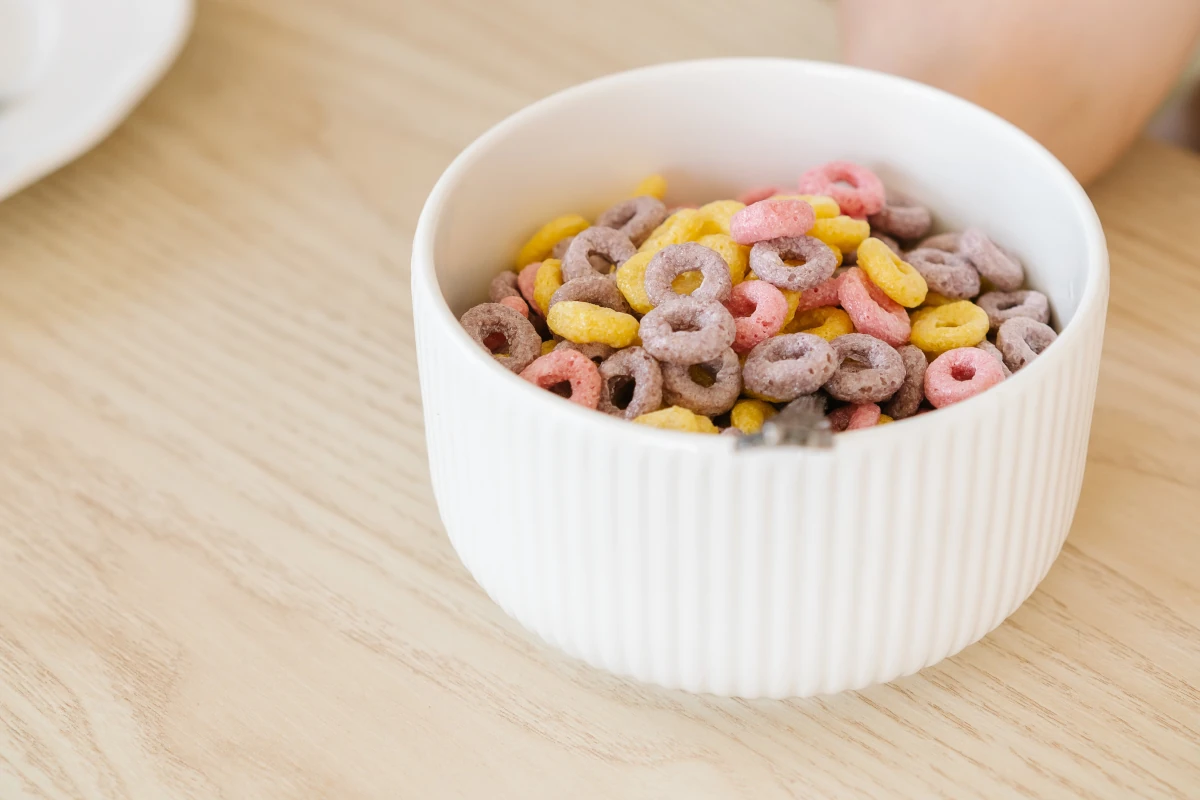
WK Kellogg announced on August 6 that it will remove artificial colors from every cereal it makes by the end of 2026. That is a full year earlier than the timeline the company gave in August 2025. Reformulated cereals go into production later this year and should reach shelves before the end of December. Kellogg is also pulling BHT, a preservative, from the small number of cereals and packaging that still use it.
The colors are not going away. Froot Loops and Apple Jacks will keep their reds, oranges, yellows, greens and purples. Kellogg says it found fruit and vegetable juices that produce the same shades, and it has bought equipment to run them.
Swapping synthetic dyes for natural ones does very little either way for most people with allergies. What changes is that a lot of familiar boxes will carry different ingredient lists by January.
Were the artificial dyes causing allergic reactions?
Mostly not, at least not in the way people usually mean by “allergy.”
Reactions to synthetic dyes like Red 40 and Yellow 5 are real but uncommon, and they are usually not IgE-mediated. That means they are not true allergies driven by the same immune pathway as a peanut or shellfish reaction. FD&C Yellow No. 5 (tartrazine) is the best studied, and an FDA committee concluded back in 1986 that it may cause hives in fewer than one in 10,000 people. Some patients with aspirin sensitivity or chronic hives report flares with certain dyes. The FDA still considers the currently approved synthetic dyes safe.
The pressure behind these reformulations has come mostly from concerns about children’s behavior, from state attorneys general, and from retailers. Target stopped selling cereals with artificial colors at the end of May. Walmart is removing them from its store brands by January 2027. Allergy was not the driver.
Does “natural color” mean safer?
Not automatically. It means a different risk profile.
Plant and mineral colorants are made of actual biological material, and some of that material contains protein. Protein is what the immune system reacts to. Two colorants have a documented track record:
Carmine, also sold as cochineal extract, is a red made from dried cochineal insects. It is the best documented colorant allergy there is, with reported reactions ranging from hives to anaphylaxis. Sensitization sometimes happens through cosmetics rather than food. There are published cases of women who developed carmine allergy from eyeshadow and later reacted to a carmine-colored food. The FDA took this seriously enough that since January 2011 carmine and cochineal extract must be named on the label rather than hidden under “color added.”
Annatto, an orange-yellow from achiote seeds, has a much thinner case file. Only one anaphylaxis case has been reported in its long history of use, though it has been linked to flares in some people with recurrent hives.
Everything else in common use, including beet juice, turmeric, spirulina, paprika, saffron, grape skin extract and black carrot, has rarely been linked to reactions. Those are the ingredients Kellogg is describing when it says fruit and vegetable juices. Nobody should throw out a box of Froot Loops over this.
The change worth paying attention to
Reformulation means the ingredient panel on a box you have bought for five years is about to be different. If your household manages a food allergy, that is the practical risk here, and it has nothing to do with the color.
A few things to keep in mind between now and next spring, while old and new stock sit side by side on the same shelf:
Colorants are not major food allergens under US labeling law. There are nine of those, and none of them is a color. A colorant will never appear in a “Contains” statement at the bottom of the label. If you are avoiding one, you have to read the full ingredient list.
Carmine and cochineal extract are the exception and must be named outright. Other exempt colors can still be declared collectively as “color added” or “colored with vegetable juice,” so a general phrase does not always tell you which plant it came from.
Recipe changes sometimes come with production changes. A cereal that moves to a different line or a different facility may pick up a new advisory statement about milk, wheat, soy or tree nuts, or lose one it used to carry. Those statements are voluntary and easy to miss if you are not looking.
Kellogg has also committed to removing FD&C dyes from cereals served in schools for the 2026-27 school year. If your child eats school breakfast under a documented allergy plan, it is worth asking the school nutrition office for updated ingredient sheets in September rather than assuming last year’s paperwork still applies.
Who should look a little closer
If you have known carmine sensitivity, keep doing what you are doing. Nothing in Kellogg’s announcement suggests carmine is coming, but it is used widely elsewhere in yogurts, fruit drinks, candy and ice cream, and this industry-wide shift away from synthetic reds means more products will be looking for a natural red from somewhere.
If you have chronic urticaria and have noticed food-related patterns, a reformulated product is a reasonable thing to mention at your next visit. Annatto has been reported to aggravate symptoms in some patients with recurrent hives, though the evidence is not strong and most of the older studies lacked proper blinded challenges.
If you or your child has a diagnosed food allergy, the routine does not change. Read the label every time, including on products you consider safe, and keep your epinephrine (EpiPen, Auvi-Q or neffy) with you. Epinephrine is the first treatment for anaphylaxis. Antihistamines have a role afterward for lingering skin symptoms, but they do not treat a severe reaction and should never be used in place of epinephrine.
When to see an allergist
Colorant reactions are hard to pin down on your own, partly because they are rare and partly because the suspect ingredient is usually one line in a long panel. If you have had hives, swelling, stomach upset or breathing trouble after a food and cannot identify the cause, testing can help. Skin prick testing and specific IgE testing are available for carmine and annatto, and a supervised oral challenge remains the most reliable way to confirm or rule out a colorant.
At New York Allergy & Sinus Centers, our board-certified allergists work with patients across Manhattan, Brooklyn, Queens and the Bronx to sort out food and additive reactions and build a plan you can actually follow at the grocery store. Call (212) 686-6321 to schedule an appointment, or request one through our website.