
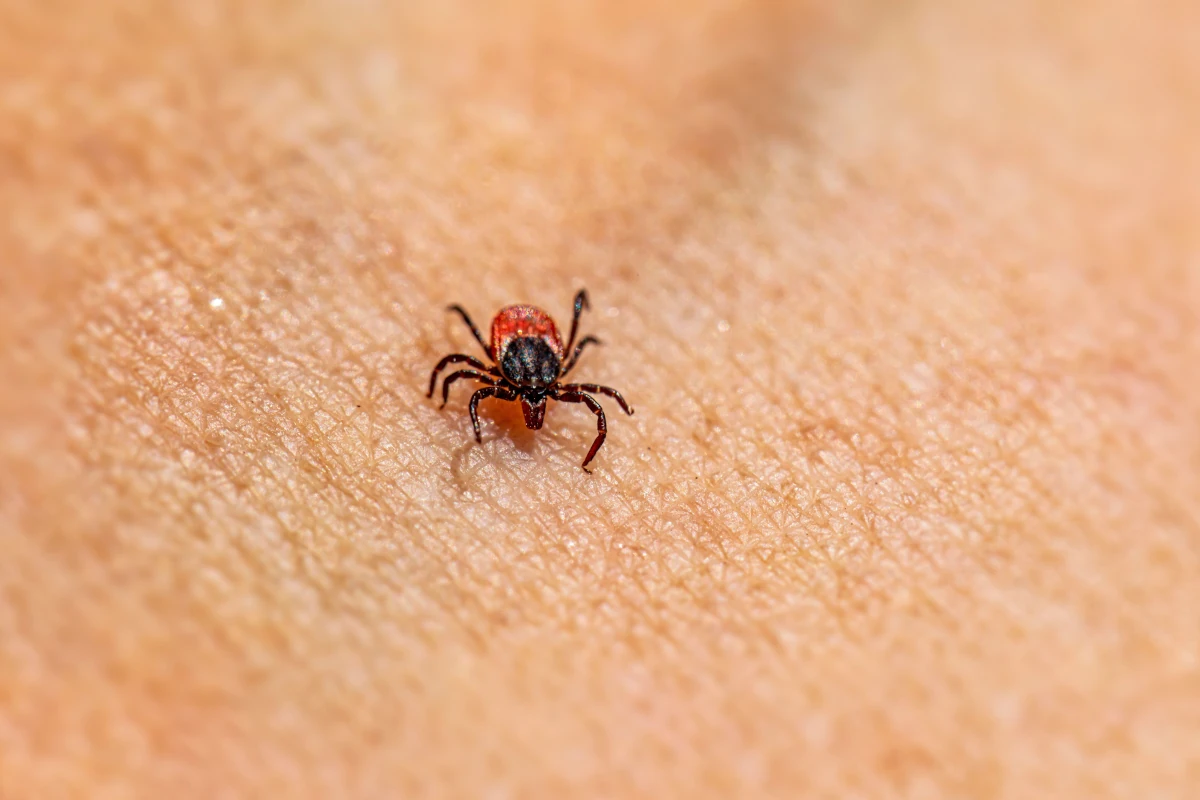
New York is one of the most Lyme-endemic states in the country. Over the last three years, the state has averaged more than 17,500 new cases per year, with over 19,000 reported in 2023 alone. In New York City, nearly 2,800 cases were recorded in 2024, with tick populations now established in parks across all five boroughs.
Lyme disease is caused by the bacterium Borrelia burgdorferi, transmitted through the bite of an infected blacklegged tick (also called a deer tick). It’s treatable, particularly when caught early. The problem is that a lot of people don’t catch it early, because the symptoms in the first few weeks are easy to dismiss as a summer cold or general fatigue.
Here’s what to know.
How Lyme disease spreads
Blacklegged ticks pick up Borrelia burgdorferi by feeding on infected animals, particularly white-footed mice. Once infected, the tick can transmit the bacteria to a human host during a subsequent bite.
Transmission isn’t immediate. In most cases, a blacklegged tick needs to be attached for 36 to 48 hours before it can pass the bacteria on. That’s why finding and removing a tick promptly matters so much. A tick that’s been on for less than a day is unlikely to have transmitted Lyme, even if it was carrying the bacteria.
Ticks are most active from May through September in New York, though blacklegged ticks can remain active into late autumn if temperatures stay above freezing.
Symptoms of Lyme disease
Lyme disease progresses in stages, and the symptoms look different depending on how long the infection has been left untreated.
Early (days to weeks after the bite)
The most recognisable early sign is a rash called erythema migrans, an expanding red circle often described as a bull’s-eye, that appears at or near the bite site. It shows up in roughly 70 to 80% of people with Lyme disease, typically within 3 to 30 days of the bite.
Not everyone gets the rash, and not every tick bite rash is Lyme. But an expanding rash after a tick bite should be taken seriously.
Other early symptoms include:
- Fever and chills
- Fatigue
- Headache
- Muscle and joint aches
- Swollen lymph nodes
These symptoms on their own are easy to attribute to a virus or summer flu. If you’ve recently spent time outdoors in a tick-prone area and are feeling unwell, mention it to your doctor.
Later (weeks to months if untreated)
If Lyme disease goes untreated in the early stage, the infection can spread. Later symptoms include:
- Severe joint pain and swelling, particularly in the knees
- Neurological symptoms: facial paralysis (Bell’s palsy), numbness or tingling in the limbs, meningitis
- Heart problems, including irregular heartbeat (Lyme carditis)
- Inflammation of the eyes
These complications are more serious and take longer to treat. Getting diagnosed and treated in the early stage avoids most of them.
Post-treatment Lyme disease syndrome
Some people continue experiencing fatigue, joint pain, brain fog, and other symptoms for months after completing antibiotic treatment. This is sometimes called post-treatment Lyme disease syndrome (PTLDS). It affects roughly 10 to 20% of people treated for Lyme disease.
There’s no universally accepted treatment for PTLDS, and research into effective approaches is ongoing. If you’re experiencing persistent symptoms after Lyme treatment, it’s worth discussing with your doctor rather than attributing it to something else.
Diagnosing Lyme disease
Diagnosis is based on symptoms, a history of possible tick exposure, and blood tests. The standard testing approach uses two steps: an initial ELISA test followed by a Western blot if the first test is positive or borderline.
A few things worth knowing about Lyme testing:
Early testing can produce false negatives. In the first few weeks of infection, the body may not yet have produced enough antibodies for the test to detect. If you have classic early symptoms (the rash, flu-like illness after a tick bite) and test negative early on, your doctor may still treat based on clinical presentation.
A positive test alone doesn’t confirm active infection. Antibodies can persist for years after successful treatment. Test results need to be interpreted alongside symptoms and history.
The rash is usually enough. If you have a clear erythema migrans rash after potential tick exposure, most guidelines support starting treatment without waiting for lab results.
Treatment
Lyme disease is treated with antibiotics. When caught in the early stage, a course of oral doxycycline, amoxicillin, or cefuroxime is usually effective. Most people recover fully with treatment.
More advanced cases, particularly those with neurological involvement, may require intravenous antibiotics.
The earlier treatment starts, the better the outcome. This isn’t a condition where waiting to see how things develop is a good idea.
Other tick-borne diseases to know about
Lyme is the most common tick-borne disease in New York, but blacklegged ticks can carry other pathogens too. Co-infections are possible. The same tick bite can transmit more than one pathogen.
Anaplasmosis: New York averages around 1,300 cases per year. Symptoms include fever, headache, muscle aches, and low white blood cell count. Treated with doxycycline.
Babesiosis: around 600 cases per year in New York. A parasitic infection of red blood cells. Can be more serious in older adults, people without a spleen, or those who are immunocompromised. Symptoms include fever, fatigue, and haemolytic anaemia.
Rocky Mountain spotted fever: less common but potentially severe. Causes fever, headache, and a characteristic spotted rash. Requires prompt treatment.
Powassan virus: rare but serious. Unlike Lyme, Powassan can be transmitted within minutes of a tick attaching. No specific treatment exists; management is supportive.
If you develop fever, rash, or notable fatigue after a tick bite, tell your doctor which tick-borne diseases are circulating in your area. Treatment for some of these (particularly anaplasmosis and Rocky Mountain spotted fever) needs to start quickly.
Lyme disease and allergy: what’s the connection?
This comes up enough to be worth mentioning. Lyme disease is caused by a bacterium and treated with antibiotics. Alpha-gal syndrome is a tick-triggered food allergy caused by the lone star tick (a different species from the one that transmits Lyme). The two conditions can exist in the same person but are unrelated to each other.
What they share is the same prevention approach: avoid tick bites.
If you’ve had a tick bite and are experiencing unexplained allergic reactions after eating red meat, particularly reactions that come on several hours after eating, that’s worth investigating separately from any Lyme concerns.
When to see a doctor
See a doctor if:
- You have an expanding rash, especially a bull’s-eye pattern, at or near a tick bite site
- You develop fever, fatigue, headache, or muscle aches within 30 days of a tick bite
- A tick was attached to you for more than 24 to 36 hours
- You have joint pain, neurological symptoms, or heart palpitations that could be related to a past tick bite
- You’re experiencing persistent symptoms after Lyme treatment
Early diagnosis and treatment gives you the best outcome. If in doubt, get checked.
Protecting yourself this summer
The same precautions that reduce your risk of Lyme disease apply across all tick-borne illnesses:
- Wear long pants tucked into socks and use DEET or permethrin when spending time in tick habitat
- Do a full-body tick check after being outdoors
- Shower within two hours of coming inside
- Remove any attached ticks promptly with fine-tipped tweezers
For a more detailed rundown, see our tick bite prevention guide.
At New York Allergy and Sinus Centers, our physicians can evaluate symptoms following a tick bite, discuss testing, and help you understand your risk. Call us at (212) 686-6321 or book an appointment online.