
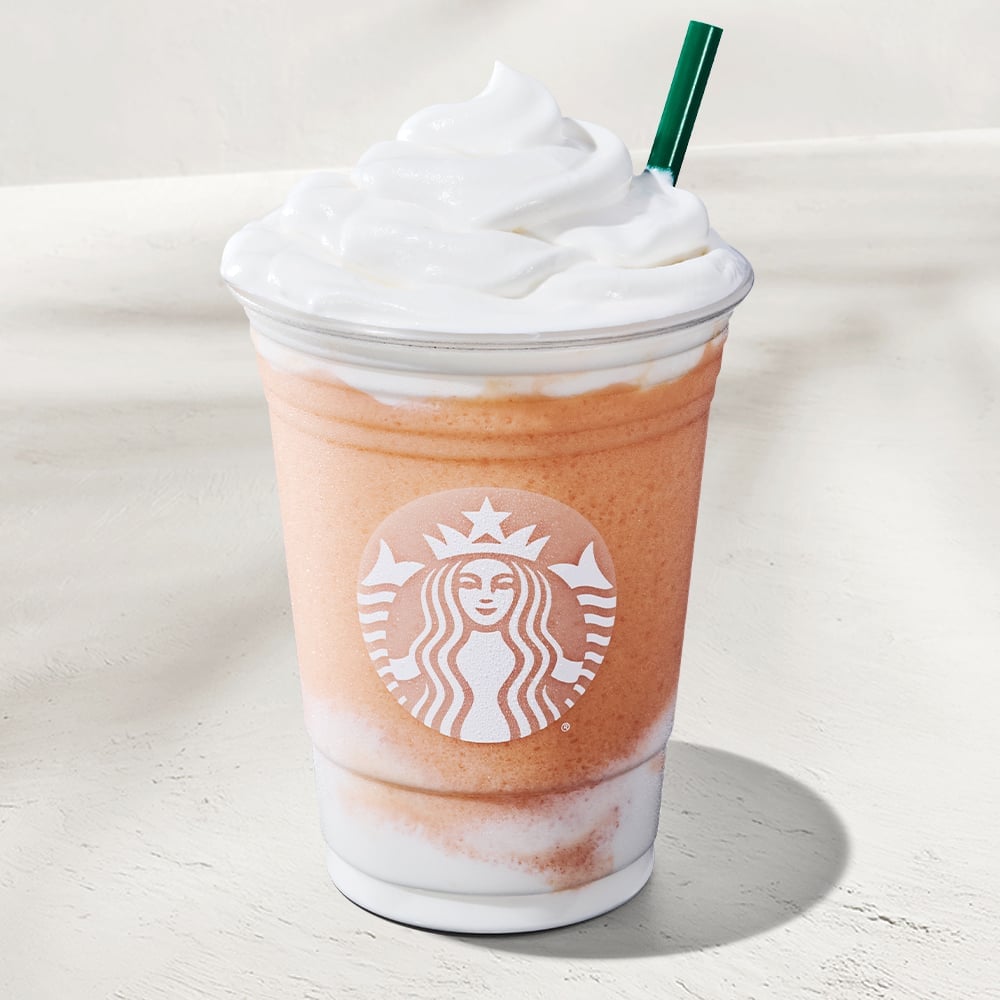
Starbucks rolled out its Orange Cream lineup on July 28, and it is already all over social media. Five drinks are on the menu for a limited run: Orange Cream Cold Brew, Iced Orange Cream Latte, Iced Orange Cream Matcha, Iced Orange Cream Chai, and the Orange Cream Frappuccino. Most of them get their flavour from a new orange cream cold foam layered on top.
If you or your child has a food allergy, a new seasonal drink is exactly the situation where things go wrong. The recipe is unfamiliar, the barista may be making it for the first time, and the ingredient list has not made it into anyone’s head yet. Here is what our patients should be thinking about.
Soy is the one people miss
There are two separate ways soy can show up in these drinks.
The first is the flavoring itself. Starbucks publishes full ingredient listings for these drinks on its own site, and the Orange Vanilla Sweet Powder is declared as cane sugar and vegetable juice concentrate for color, natural flavors, maltodextrin, salt, rice hulls, citric acid and soybean oil. Soybean oil is common across the flavored powders Starbucks uses, so this is not unique to the orange one.
In the US, highly refined soybean oil is exempt from major allergen labeling because refining removes almost all of the soy protein, and most people with soy allergy tolerate it without trouble. The label does not specify whether the oil is refined. If your soy allergy is severe, or you have reacted to soybean oil before, that is a question for your allergist rather than something to settle while you are standing in the queue.
The second one catches more people out. As published, none of these drinks contain soy protein. If you order one dairy-free, that changes, because the nondairy sweet cream base Starbucks uses is built on soymilk, soy protein isolate and soy lecithin along with oatmilk. Asking for the nondairy version removes the milk and adds soy. You cannot have both. Anyone allergic to soy and milk should skip the foam rather than swapping it.
One thing to know before you go looking: Starbucks does not print a “Contains” allergen summary on these product pages. The ingredient list is all you get, so there is no official line telling you whether the company treats that soybean oil as an allergen or not.
A dairy-free powder is not a dairy-free drink
The orange vanilla powder contains no milk. That is true, and it is also the single most misleading fact about these drinks.
The powder is not the drink. The Cold Brew, the Matcha and the Chai all go through the new orange cream cold foam, and that foam is dairy twice over: it is built on vanilla sweet cream, which itself lists cream, and then milk again alongside it. Confirming that the flavouring is dairy-free tells you nothing useful about what ends up in the cup, and we have already seen people online draw exactly the wrong conclusion from it.
The Frappuccino is the clearest example. Milk is listed as its own ingredient and cream appears again inside the whipped cream on top, so asking for no whip removes one source of dairy and leaves the other. There is no version of that drink without milk in it.
The Matcha and the Chai both start with milk before the foam goes on, so they carry dairy in two places as well.
The Cold Brew is the only one where the dairy sits solely in the foam. Brewed coffee, ice, vanilla syrup and the orange cream cold foam is the whole recipe. Order it without the foam and you have a dairy-free drink, though you have also removed the orange flavour, which rather defeats the purpose.
Carrot and bell pepper are listed ingredients, not traces
The powder takes its color from a vegetable juice concentrate made from pepper and carrot. Starbucks does not say which pepper, and the English word covers everything from black peppercorns to chili. The French-language ingredient listing on the foodservice packaging uses “poivron”, which means bell pepper specifically, so that is the likely source.
If you have birch or mugwort pollen allergy and raw carrot makes your mouth itch, a small quantity of processed concentrate is usually tolerated, because the proteins behind oral allergy syndrome break down with heat and processing. Usually, it is not always. Carrot belongs to the group of foods linked with mugwort and celery sensitization, and reactions to cooked or processed carrot are documented.
If you have a diagnosed allergy to carrot or to bell pepper rather than pollen-related mouth itching, this is a declared ingredient rather than a cross-contact risk, and the drinks are worth avoiding. People with a bell pepper allergy often react to paprika too, since it is made from the same plant.
Worth separating the two peppers here, because the Iced Orange Cream Chai contains both. The coloring in the powder comes from Capsicum, the plant that gives us bell peppers, paprika and chili. The black pepper in the chai concentrate is Piper nigrum, an unrelated plant. Reacting to one says nothing about the other.
The chai has the longest ingredient list of the five
If you have a spice allergy, the Iced Orange Cream Chai is the one to look at closely. The chai concentrate declares black pepper, ginger, cardamom, cinnamon, cloves and star anise, and it also contains honey.
Cinnamon is worth flagging on its own. It is not one of the nine major allergens, so in most products it can sit inside “natural flavors” without being named. Here it is declared outright, which at least means you can see it.
Honey matters for a different reason. Infants under twelve months should not have honey at all because of the risk of infant botulism, so this is not a drink to share sips of with a baby.
What “natural flavors” does and does not hide
The label says “naturally flavored with other natural flavors” and leaves it there, which understandably annoys people.
Under US law, any of the nine major allergens has to be declared even when it arrives inside a flavouring. Milk, soy, egg, wheat, sesame, peanut, tree nut, fish and shellfish cannot hide in that phrase. Sweeteners like sucralose are additives rather than flavourings and have to be named separately, so they cannot hide there either.
Spices are the real gap. Cinnamon, for instance, is not a major allergen, so it can sit inside “natural flavors” without appearing anywhere on the label. If you react to a specific spice, or to something else outside the nine, the phrase gives you nothing to work with, and avoidance is the safer call.
The orange flavor also comes from natural flavors rather than declared orange juice. That does not rule out orange-derived material. Citrus allergy is uncommon but it is real, and if you have one, an undisclosed citrus flavoring is not something you can reason your way around.
Rice hulls round out the list and are there as an anti-caking agent, keeping the powder loose. Rice allergy is uncommon.
Cross-contact is the bigger risk
Starbucks is direct about this in its own guidance: it cannot guarantee any product is free from allergens, because the same equipment and utensils are used across the menu. Cold foam is made in a blender that has just made another cold foam. Frappuccino pitchers are shared. Almondmilk, soymilk, and pistachio sauce all live behind the same bar.
For a mild allergy, this is usually manageable. For someone with a history of anaphylaxis to milk, soy or tree nuts, a busy Manhattan store at 8am is not the place to test it.
Not every Starbucks is run by Starbucks
The kiosks inside supermarkets, airports, hospitals and university campuses are licensed stores, operated by another company under the Starbucks name. Stock, formulations and staff training are not always identical to a company-operated cafe.
Do not assume the answer you got at the store near your office applies to the one in the hospital lobby. Ask each time.
How to order more carefully
Look the drink up on starbucks.com or in the app before you reach the counter. Not every drink in the lineup has its own published listing, and where one is missing, it usually means the drink is built from components that are listed elsewhere, so ask the barista to show you the ingredient information in store rather than guessing from a similar drink.
Tell them you have an allergy rather than just naming what you want left out, because that phrasing is what prompts them to change gloves and reach for a clean pitcher.
Ask for the cold foam to be made in a rinsed blender. Go at a quieter time if you can. And watch the drink being made, which sounds excessive until the one time it saves you.
Feeling unwell is not the same as an allergic reaction
Nausea or stomach upset a few hours after a sweet drink is more often intolerance, or simply the sugar load, than allergy. Allergic reactions usually begin within minutes to two hours and involve the skin, breathing or blood pressure rather than the stomach alone.
The difference matters in both directions. It stops people cutting foods out of their diet for no reason, and it stops them dismissing something that deserves attention.
If a reaction starts
Epinephrine first, and quickly. That means your EpiPen, Auvi-Q, or neffy if you carry the intranasal version. Do not wait to see whether it settles, and do not reach for an antihistamine instead. Antihistamines have a role after epinephrine, where they help with the itching and hives driven by histamine, but they do nothing for the airway and blood pressure changes that make anaphylaxis dangerous.
Call 911 after using epinephrine, even if symptoms improve. Reactions can return an hour or two later.
If you are unsure which device suits you, or you have been putting off replacing an expired one, our comparison of Auvi-Q and EpiPen and neffy walks through the differences.
When to come in
Plenty of people avoid whole categories of food based on a reaction they had years ago and never had tested. If a coffee shop menu makes you anxious, that is worth doing something about, because testing often turns up a narrower list of triggers than people expect.
NY Allergy & Sinus Centers has six Manhattan offices plus Glendale, Staten Island, Garden City and New Hyde Park, and Dr. Morris Nejat and our team see food allergy patients of every age. Call (212) 686-6321 to book, and bring the list of things you have been avoiding.
This article is general information, not medical advice for your situation. Ingredients change without notice, so check the current listing on starbucks.com before ordering. Last reviewed August 2026.