
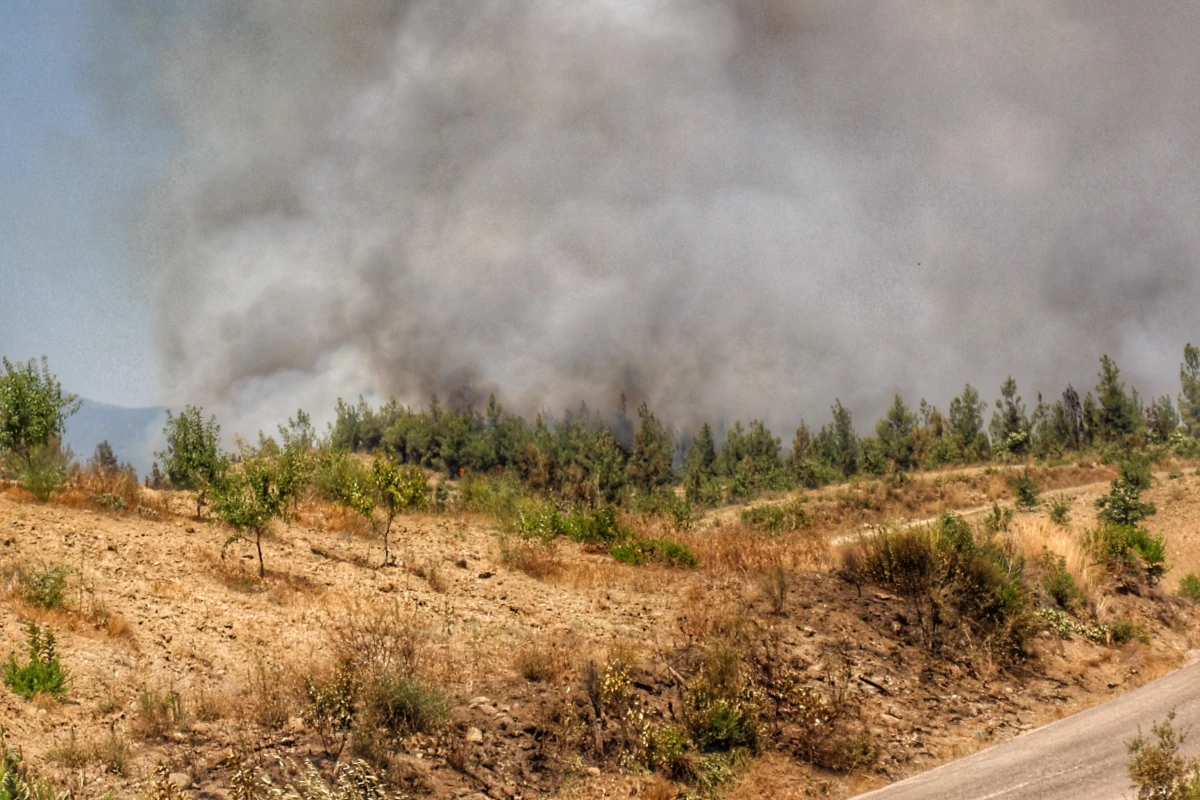
If you were in the city during the third week of July, you did not need an app to tell you the air had changed. The skyline went yellow-orange, the Statue of Liberty faded out from the Staten Island Ferry, and a lot of New Yorkers reported the smell of burning indoors with the windows shut.
That smoke came from more than a hundred wildfires burning across western and northwestern Ontario. At its worst, on the Thursday evening, the city’s Air Quality Index crested at 289, which sits in the Very Unhealthy range. For a stretch that day New York had some of the worst air of any major city in the world.
The smoke has cleared for now. It will come back, if not this summer then next, so it is worth knowing what to do before the next advisory lands.
Why smoke bothers you even if you have no allergies
Wildfire smoke is mostly fine particulate matter, which gets shortened to PM2.5. The particles are small enough to get past the defenses in your nose and throat and travel deep into the lungs.
This is an irritant response rather than an allergic one, and the difference matters for how you treat it. Pollen triggers an immune reaction, with histamine released and the itchy, sneezy, watery-eyed symptoms that go with it. Smoke does not do that. It inflames and irritates the airway directly. So antihistamines, which many people reach for out of habit during allergy season, will not do much for smoke exposure.
What you are more likely to notice is a cough that will not settle, a scratchy throat, chest tightness, burning eyes, a headache, or feeling short of breath on a walk that normally would not register.
Who needs to be more careful
Everyone is affected once the AQI climbs high enough. Some people feel it sooner and feel it worse:
- Anyone with asthma, COPD, or chronic bronchitis
- Children, whose airways are smaller and who breathe faster relative to their size
- Adults over 65
- People who are pregnant
- Anyone with heart disease
- People with chronic sinus problems, who often find smoke sets off congestion and facial pressure
If you have allergic asthma, smoke season can be rough because it stacks on top of whatever pollen is already in the air. Late July into September is ragweed territory in the Northeast, and a smoke event on top of a high ragweed day is a lot for an airway to handle.
How to check the air before you go out
Two sources are worth bookmarking.
AirNow.gov is run by the EPA and gives you a current AQI reading plus a forecast for the next day, searchable by zip code. The New York State Department of Environmental Conservation issues Air Quality Health Advisories whenever fine particulate matter or ozone is expected to push the index above 100, and those get picked up by local news and the city’s emergency notification system.
The scale itself is straightforward once you have seen it a few times:
- 0 to 50 (green) is good, no precautions needed
- 51 to 100 (yellow) is moderate, and unusually sensitive people may notice something
- 101 to 150 (orange) is unhealthy for sensitive groups, which is the point where people with asthma or heart or lung conditions should scale back outdoor exertion
- 151 to 200 (red) is unhealthy for everyone
- 201 to 300 (purple) is very unhealthy, and outdoor activity should be avoided
- Above 300 (maroon) is hazardous
Worth signing up for Notify NYC as well, since advisories go out there before most people notice the haze.
What actually helps
Stay indoors when the number is high. That is the single most effective thing, and it sounds obvious, but plenty of people push through a run or a long walk because the air looks fine at street level even when it is not.
Keep windows and doors closed. If you have air conditioning, run it on recirculate rather than pulling outside air in. Central systems should be set to recirculate too, and it is worth putting in a fresh filter if yours is due.
A portable HEPA air purifier makes a real difference in a bedroom or a single room where you spend most of your time. Size it to the room rather than buying the largest unit on the shelf.
Avoid adding particles indoors while you are at it. Candles, incense, gas stoves, and vacuuming without a HEPA filter all put more fine particulate into a space you are trying to keep clean.
If you have to be outside, wear a properly fitted N95 or KN95. Cloth masks and surgical masks do very little against PM2.5 because the particles go around the edges and through the weave. During the July event the city handed out free KN95s at NYPD precincts, public library branches, and some firehouses, and that distribution tends to repeat during major advisories.
If you have asthma, keep your rescue inhaler on you and stay on your controller medication. Smoke season is the wrong time to skip doses because you are feeling well. If you have a written asthma action plan, follow it. If you do not have one, that is a good conversation to have at your next visit.
When to get seen
Call us if a cough, wheeze, or chest tightness hangs on after the air clears, if you are reaching for your rescue inhaler more often than usual, or if smoke exposure reliably knocks you out for days while other people around you bounce back within hours. That last pattern sometimes points to an underlying airway problem nobody has diagnosed yet.
Get emergency care straight away for severe shortness of breath, chest pain, confusion, or a rescue inhaler that is not working.
Testing helps you plan for the rest of the year
Smoke is not something you can be allergic to, and no test will tell you how you will react to it. What testing does tell you is what else is loading your airway. If you already react to ragweed, dust mites, or mold, every one of those makes a smoke day worse, and treating them properly gives your lungs more room when the air quality drops.
Our allergists test for environmental and seasonal allergens across all of our New York City locations, and we can build a plan that covers both allergy season and smoke season.
To book an appointment, call (212) 686-6321 or request one online.