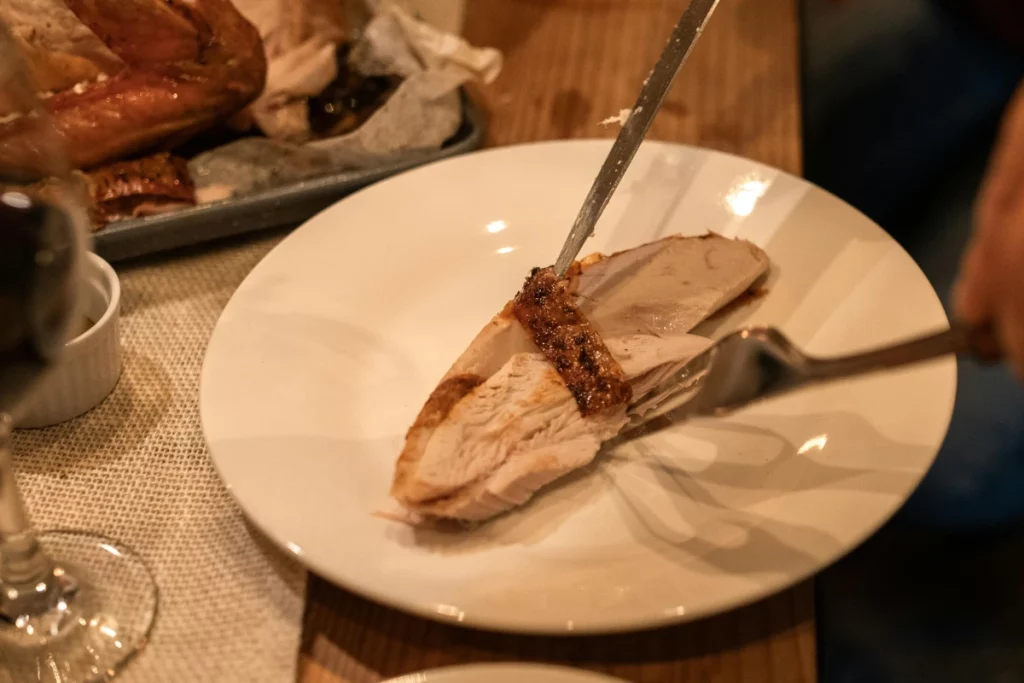
What Is a Turkey Allergy?
Turkey allergy is an immune-mediated reaction that occurs when the immune system identifies proteins in turkey meat as harmful and mounts an allergic response. While poultry allergies in general are less common than allergies to foods such as peanuts, tree nuts, or shellfish, they are a recognized cause of food-induced allergic reactions and can range from mild to potentially life-threatening.
Turkey is a staple protein in the American diet, present not only as a standalone meat but also in deli products, sausages, burgers, soups, casseroles, and processed foods where it is used as a lower-fat alternative to other meats. This wide presence across food categories makes avoidance more involved than it might initially appear.
The primary allergenic proteins in turkey are muscle proteins including serum albumin and myosin, which are present across multiple animal species. Because these proteins are shared — to varying degrees — between turkey and other poultry and meats, cross-reactivity is a clinically important consideration in turkey allergy. Individuals allergic to turkey may also react to chicken, duck, or other poultry, though the degree of cross-reactivity varies between individuals and cannot be reliably predicted without allergy testing.
It is important to distinguish a true turkey allergy from other adverse reactions to turkey that do not involve the immune system. Turkey contains tryptophan and is also frequently prepared with a range of marinades, brines, seasonings, and additives — any of which could independently cause a reaction. Additionally, turkey skin and certain preparations may contain sulfites or other preservatives that trigger reactions in sensitive individuals. An allergist can help determine whether turkey itself is the true trigger.
Turkey allergy should also be considered in the context of alpha-gal syndrome — a tick-bite-triggered allergy to a carbohydrate found in mammalian meat — though turkey is a bird and therefore does not contain alpha-gal. If a patient reports reactions specifically to red meats rather than poultry, alpha-gal syndrome is a more likely diagnosis than turkey allergy.
Turkey Allergy Symptoms
Symptoms of turkey allergy typically develop within minutes to a couple of hours of consuming turkey or products containing turkey. They can range from mild to severe and may include:
- Skin rash or flushing
- Hives
- Itching or tingling in the mouth or throat
- Swelling of the lips, tongue, or face (angioedema)
- Nasal congestion or runny nose
- Sneezing
- Watery or itchy eyes
- Wheezing or shortness of breath
- Stomach cramps
- Nausea or vomiting
- Diarrhea
- Dizziness or lightheadedness
- Anaphylaxis in severe cases
Anaphylaxis is a serious, potentially life-threatening systemic reaction requiring immediate treatment with epinephrine. Signs include a sudden drop in blood pressure, rapid or weak pulse, severe difficulty breathing, and loss of consciousness. Anyone with a known risk of anaphylaxis from turkey should carry epinephrine at all times.
Poultry and Meats That Cross-React With Turkey
Because turkey shares allergenic muscle proteins with other poultry and some meats, cross-reactivity is a common concern in turkey allergy management. Animals frequently associated with cross-reactivity include:
- Chicken
- Duck
- Goose
- Pheasant
- Quail
- Pork (via serum albumin cross-reactivity in some individuals)
- Beef (less commonly)
Cross-reactivity between poultry and egg is also possible in some individuals through a phenomenon known as bird-egg syndrome, where sensitization to bird proteins — typically through feather or bird exposure — leads to reactivity to egg yolk proteins. This is a distinct pathway from a standard egg allergy and is worth discussing with an allergist if relevant.
Turkey Allergy Diagnosis
Medical History and Symptom Review
A careful clinical history is the starting point for diagnosing turkey allergy. Your allergist will review your symptoms, their timing relative to turkey consumption, and any history of reactions to other poultry or meats. Because turkey is often consumed alongside a range of other ingredients — particularly during holiday meals — identifying turkey as the specific trigger rather than a seasoning, brine ingredient, or other component requires careful detective work.
Skin Prick Test
A skin prick test involves applying a small amount of turkey allergen extract to the skin, which is then lightly pricked. A raised, itchy wheal at the test site within 15–20 minutes is a positive indicator of sensitization to turkey protein.
Blood Test
A blood test measuring specific IgE antibodies to turkey and related poultry proteins can confirm sensitization and provide detail about cross-reactivity patterns. Blood testing is particularly useful when skin testing is not appropriate or when a broader panel of poultry and meat allergens needs to be assessed simultaneously.
Oral Food Challenge
In cases where test results are ambiguous or where the clinical history does not clearly implicate turkey, an allergist may recommend an oral food challenge. This involves consuming incrementally increasing amounts of turkey under direct medical supervision in a clinical setting equipped to manage any reaction.
Turkey Allergy Treatment
Avoidance
Strict avoidance of turkey and products containing turkey is the cornerstone of management. Under US food labeling law, poultry is not currently listed as a named major allergen in the way that peanuts, tree nuts, milk, eggs, or fish are, which means turkey may not always be prominently flagged on food labels. Careful review of ingredient lists is essential, particularly for processed meats, soups, stocks, ready meals, and deli products where turkey may be a less obvious ingredient.
Hidden sources of turkey to be aware of include turkey-based deli meats sometimes labeled simply as “deli meat” or “cold cuts,” turkey stock in soups and gravies, turkey-based sausages and burgers, and stuffing mixes or meal kits that include turkey as a component.
Antihistamines
For mild reactions following accidental exposure, antihistamines can be given after epinephrine administration to help block the histamine-mediated portion of an allergic reaction. They should not be depended on as a standalone treatment for food allergies.
Epinephrine
Individuals with a history of severe reactions to turkey should carry an epinephrine auto-injector (such as an EpiPen, Auvi-Q, or neffy intranasal epinephrine) at all times. Epinephrine is the first-line emergency treatment for anaphylaxis and should be administered at the first signs of a severe systemic reaction, followed immediately by calling emergency services.
If you are in the NYC area and suspect a turkey or poultry allergy, our allergists can provide targeted testing and a comprehensive management plan. Book an appointment online or call (212) 686-6321.
Turkey Allergy Frequently Asked Questions
Is Turkey Allergy Common?
Turkey allergy is uncommon relative to the major food allergens, but it is a recognized cause of food-induced allergic reactions. Poultry allergies as a group are more prevalent in parts of Europe than in the United States, possibly reflecting differences in dietary patterns and sensitization routes. Because turkey is consumed so widely — particularly around Thanksgiving and Christmas — reactions that do occur are often first noticed during holiday meals.
Can You Be Allergic to Turkey but Tolerate Chicken?
It is possible, though less common. Cross-reactivity between turkey and chicken is frequently observed because the two birds share many of the same allergenic proteins. However, the degree of cross-reactivity varies between individuals, and some people with turkey allergy can tolerate chicken without issue. Allergy testing and, in some cases, a supervised oral food challenge are the most reliable ways to determine your individual reactivity pattern.
Is Turkey Allergy the Same as a Chicken Allergy?
Turkey allergy and chicken allergy are distinct diagnoses, though they frequently overlap due to shared allergenic proteins. Being diagnosed with one does not automatically mean you are allergic to both, but cross-reactivity is common enough that both should be assessed when either is suspected.
Could My Reaction Be to Something in the Turkey Preparation Rather Than the Turkey Itself?
Yes, this is an important consideration. Turkey is frequently prepared with brines, marinades, seasonings, and glazes that contain potential allergens including celery, garlic, mustard, sulfites, or spices. Pre-basted or pre-seasoned turkeys in particular may contain a range of additives. An allergist can help determine whether the reaction is to turkey protein itself or to another ingredient in the preparation.
Can Turkey Allergy Develop in Adulthood?
Yes. Food allergies, including poultry allergies, can develop at any age. New-onset reactions to turkey in an adult who has previously eaten it without issue should be taken seriously and evaluated by an allergist. Adult-onset food allergy is more common than many people realize and should not be dismissed as coincidence or a one-off event.
What Should I Do at Thanksgiving or Holiday Meals if I Have a Turkey Allergy?
Holiday meals present a particular challenge for individuals with turkey allergy, both because turkey is typically the centerpiece of the meal and because cross-contamination risk is high in shared cooking environments. Communicating your allergy clearly to hosts well in advance, asking detailed questions about preparation methods and shared utensils, and eating before attending if the risk cannot be adequately managed are all reasonable strategies. Carrying epinephrine to all social gatherings where food is served is essential.
Does Cooking Turkey Reduce Its Allergenicity?
Unlike some food allergens where heat degrades the responsible proteins, the muscle proteins that cause turkey allergy — including serum albumin and myosin — are relatively heat-stable. Cooking turkey does not reliably reduce its allergenicity, and individuals with a confirmed turkey allergy should avoid it in all forms, whether roasted, ground, smoked, or processed into deli products.