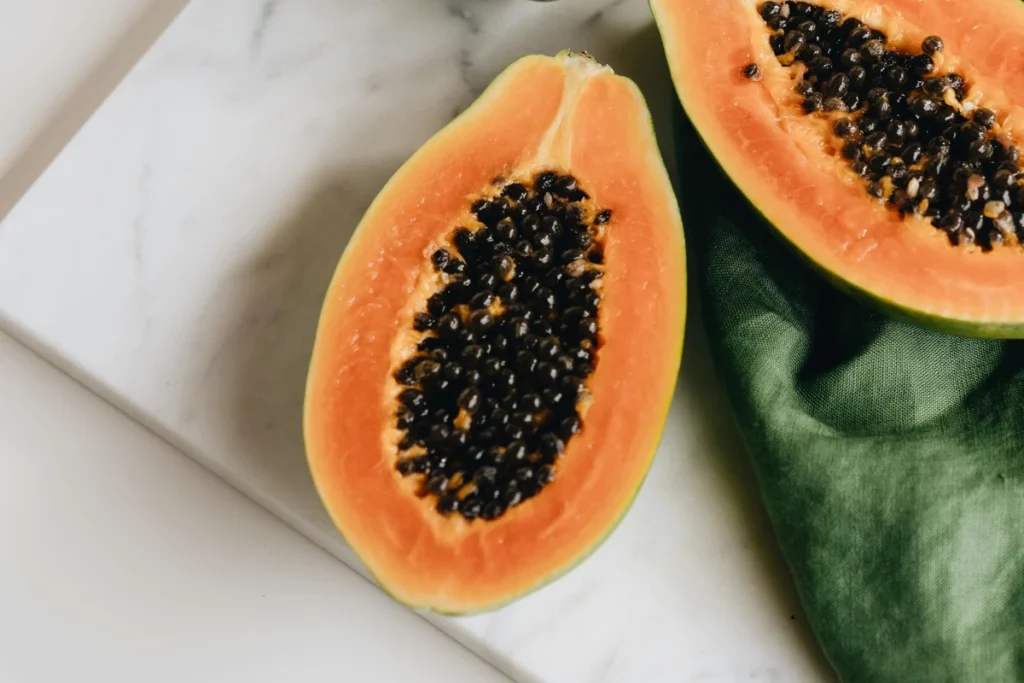
What is a papaya allergy?
Papaya allergy is an immune-mediated reaction triggered by proteins found in the papaya fruit (Carica papaya), a tropical fruit native to Central America and widely consumed across the United States in fresh, dried, and processed forms. Papaya allergy is notable for several reasons that make it more clinically complex than many other fruit allergies: it involves multiple distinct allergenic proteins with different stability profiles, it carries a significant cross-reactivity relationship with natural rubber latex, and it contains a potent proteolytic enzyme — papain — that is itself a recognized allergen and occupational sensitizer used widely across the food, pharmaceutical, and cosmetic industries.
Papaya belongs to the Caricaceae family, a small plant family with limited cross-reactivity to other common foods. Its most clinically significant cross-reactivity relationships lie outside its own botanical family — primarily with natural rubber latex through latex-fruit syndrome, and with other tropical fruits through shared protein structures.
The allergenic proteins in papaya include papain and other cysteine proteases, chitinases, and lipid transfer proteins (LTPs). Papain is the most widely studied of these and deserves specific attention. It is extracted from unripe papaya latex — the milky sap produced by the fruit and plant — and used commercially as a meat tenderizer, a digestive enzyme supplement, a contact lens cleaning agent, a cosmetic exfoliant, and an ingredient in certain pharmaceutical preparations and wound care products. Sensitization to papain can therefore occur through multiple routes beyond eating fresh papaya, and individuals may react to papain-containing products without ever having eaten the fruit itself.
The chitinase proteins in papaya are structurally similar to those in natural rubber latex, placing papaya firmly in the high-risk category of latex cross-reactive foods alongside banana, avocado, kiwi, and chestnut. Latex-allergic individuals should avoid papaya regardless of prior tolerance.
Symptoms
Papaya allergy symptoms can occur through ingestion of the fruit, skin contact with papaya flesh or latex sap, inhalation of papain powder or dust, or contact with papain-containing products. Symptoms typically develop within minutes of exposure and can range from mild to severe.
Symptoms from eating papaya:
- Itching or tingling in the mouth, lips, or throat
- Swelling of the lips, tongue, or face (angioedema)
- Hives
- Skin flushing or rash
- Stomach cramps
- Nausea or vomiting
- Diarrhea
- Wheezing or difficulty breathing
- Dizziness or lightheadedness
- Anaphylaxis in severe cases
Symptoms from skin contact or inhalation:
- Contact dermatitis at the site of exposure
- Itching, redness, or hives on the hands or face
- Runny nose or sneezing
- Watery or itchy eyes
- Worsening of asthma symptoms
- Occupational asthma in workers with regular papain dust exposure
Raw papaya and unripe papaya contain higher concentrations of papain and are generally more reactive than fully ripe fruit. Some individuals who react to raw papaya tolerate ripe papaya better, though this should not be assumed safe without allergist guidance.
Foods and products that cross-react with papaya
Latex cross-reactive foods (high clinical significance):
Other tropical fruits (variable cross-reactivity):
Products containing papain to be aware of:
- Meat tenderizer powders and marinades
- Digestive enzyme supplements
- Contact lens cleaning solutions
- Cosmetic exfoliants and enzyme peels
- Certain wound care and debridement products
- Chewing gum (some formulations)
- Beer clarifying agents (used in brewing)
- Pharmaceutical tablet coatings
Diagnosis
Clinical history
A detailed history of reactions to papaya and related products is the starting point. Your allergist will assess the nature and timing of symptoms, whether reactions occur with both raw and ripe papaya, whether any papain-containing products have caused reactions, and whether there is a background of latex allergy or other tropical fruit sensitivity. Given papaya’s position as a high-risk latex cross-reactive food, evaluation for latex sensitization is a standard part of the workup when papaya allergy is identified.
Skin prick test
A skin prick test can assess sensitization to papaya proteins. Both fresh papaya extract and commercial papain extract may be used in testing. Simultaneous testing for latex and other high-risk latex cross-reactive foods is typically performed to map the full cross-reactivity picture.
Blood test
A blood test measuring specific IgE antibodies to papaya proteins and papain can confirm sensitization. Given the multiple allergenic proteins in papaya with different clinical significance, component-resolved testing where available can provide more precise information about the likely severity of reactivity and cross-reactivity patterns.
Patch testing
Patch testing may be considered in individuals who develop contact dermatitis from handling raw papaya or from topical papain-containing products, to assess for Type IV contact sensitization.
Oral food challenge
Where test results are ambiguous or where the clinical history requires formal characterization, an oral food challenge may be recommended under direct medical supervision.
Treatment
Avoidance
Strict avoidance of papaya and papain-containing products is the primary management strategy. Papaya is not a named major allergen under US food labeling law and will not always be prominently flagged on labels. Careful ingredient review is essential across a broader range of product categories than most food allergies require, given papain’s widespread industrial use:
- Fresh, dried, and canned papaya
- Tropical fruit salads and blends
- Papaya juice and smoothies
- Meat tenderizer products — papain is a common active ingredient
- Digestive enzyme supplements listing papain or papaya enzyme
- Contact lens cleaning solutions — some formulations contain papain as a protein remover
- Skincare and cosmetic products containing papaya extract, papain enzyme, or papaya seed oil
- Beer and some processed foods where papain is used as a clarifying or processing agent
For latex-allergic individuals, papaya avoidance is recommended as a precautionary measure regardless of prior tolerance, given its position among the highest-risk latex cross-reactive foods.
Antihistamines
Oral antihistamines can be given after epinephrine administration to help block the histamine-mediated portion of an allergic reaction. They should not be depended on as a standalone treatment for food allergies.
Topical corticosteroids
For contact dermatitis reactions from handling raw papaya or papain-containing products, topical corticosteroid creams can help reduce inflammation and relieve itching at the affected site.
Epinephrine
Individuals with a history of severe papaya reactions or confirmed latex-fruit syndrome should carry an epinephrine auto-injector (such as an EpiPen, Auvi-Q, or neffy intranasal epinephrine) at all times. Epinephrine is the first-line emergency treatment for anaphylaxis and should be used at the first sign of a severe systemic reaction, followed immediately by calling emergency services.
If you are in the NYC area and have experienced reactions to papaya or papain-containing products, our allergists can provide comprehensive testing and management guidance. Book an appointment online or call (212) 686-6321.
Frequently asked questions
Is papaya allergy common?
Papaya allergy is uncommon as a standalone primary food allergy, but it is more frequently encountered in specific populations — particularly individuals with latex allergy, where papaya is among the highest-risk cross-reactive foods. Sensitization through occupational papain exposure is also recognized in food industry workers, pharmaceutical workers, and healthcare workers who use papain-containing wound care products. The broad industrial use of papain means exposure routes extend well beyond eating the fruit.
What is papain and why does it matter for allergy?
Papain is a cysteine protease enzyme extracted from the unripe latex of the papaya plant. It is one of the primary allergens in papaya and is used in a wide range of commercial products including meat tenderizers, digestive supplements, contact lens cleaners, cosmetic exfoliants, and pharmaceutical preparations. Sensitization to papain can occur through any of these routes, meaning individuals may develop a papaya-related allergy without ever having had a re hi action to eating the fruit itself. Anyone with a confirmed papaya allergy should review all product categories where papain appears, not just food labels.
Can I eat ripe papaya if I react to raw papaya?
Some individuals report greater reactivity to raw or unripe papaya, which contains higher concentrations of papain and other proteolytic enzymes than ripe fruit. Ripening reduces papain activity, and some individuals with mild sensitivity may tolerate ripe papaya better than raw. However, this is not consistent across all individuals, and assuming ripe papaya is safe based on tolerance of cooked or very ripe fruit is not reliable without allergist guidance. Any pattern of differential reactivity should be formally assessed.
I have a latex allergy. Do I need to avoid papaya even if I have eaten it without problems?
Yes, avoidance is the standard recommendation for latex-allergic individuals regardless of prior tolerance. Papaya is in the highest-risk category of latex cross-reactive foods, and sensitization can develop or intensify over time as latex allergy progresses. Tolerating papaya in the past does not guarantee continued tolerance. Your allergist can discuss the appropriate level of precaution for your specific situation.
Can papaya in skincare products cause an allergic reaction?
Yes. Skincare and cosmetic products containing papaya extract, papain enzyme peels, or papaya seed oil can trigger contact dermatitis or, in highly sensitized individuals, more systemic reactions if absorbed through compromised skin. Papaya-based enzyme exfoliants are particularly relevant as they contain active papain in concentrated form. Individuals with known papaya or papain allergy should review ingredient labels on all topical products.
Is papaya allergy related to pineapple allergy?
Papaya and pineapple are both tropical fruits containing proteolytic enzymes — papain in papaya and bromelain in pineapple — and some degree of cross-reactivity between the two has been reported. Both fruits also share chitinase proteins relevant to latex cross-reactivity. If you react to both papaya and pineapple, discussing this pattern with your allergist can help determine whether the reactions share a common allergenic mechanism.