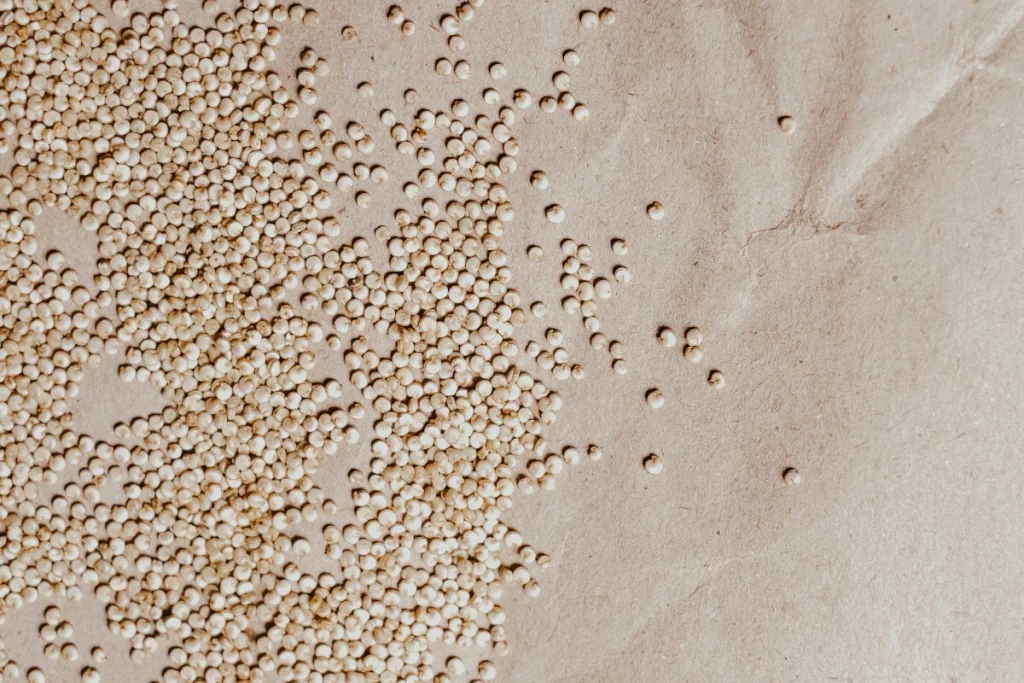
What is a quinoa allergy?
Quinoa allergy is an immune-mediated reaction triggered by proteins found in quinoa (Chenopodium quinoa), a seed native to the Andean region of South America that has become one of the most widely consumed health foods in the United States over the past two decades. Quinoa is botanically classified as a pseudocereal — it is consumed like a grain but is technically the seed of a flowering plant rather than a true cereal grass. This distinction has clinical relevance because quinoa’s allergenic proteins are structurally distinct from those of wheat, barley, and other true grains, and quinoa allergy does not predict reactivity to gluten-containing cereals.
Quinoa allergy is an emerging clinical entity. Its prevalence has increased in step with quinoa consumption, and as quinoa has moved from a niche health food to a mainstream dietary staple — appearing in supermarket own-brand products, restaurant menus, baby foods, gluten-free products, and meal replacement formulas — the opportunity for sensitization has grown considerably. It is likely underreported in the United States, where awareness of quinoa as a potential allergen remains limited among both patients and clinicians.
The allergenic proteins in quinoa are not yet as fully characterized as those in the major food allergens, but research has identified several candidate allergens including 11S globulins and 2S albumins — seed storage proteins found across a wide range of plant foods. Saponins, the bitter-tasting compounds that coat the outer layer of quinoa seeds, are not allergenic proteins themselves but are known irritants that can cause gastrointestinal discomfort and mouth irritation in anyone, regardless of allergy status. This saponin-related irritation is sometimes confused with an allergic reaction, and distinguishing the two is an important part of the diagnostic process. Most commercially available quinoa is pre-washed to remove saponins, but residual saponin content varies between products.
Quinoa belongs to the Amaranthaceae family, which also includes amaranth, spinach, beets, and chard. Cross-reactivity within this family has been reported, and individuals allergic to quinoa may show sensitization to amaranth or other Amaranthaceae family members. Quinoa also produces pollen that has been identified as an aeroallergen in some regions, and occupational sensitization through quinoa dust has been reported in food processing workers.
A further cross-reactivity consideration is the relationship between quinoa and latex. Quinoa contains chitinase-related proteins, and some degree of cross-reactivity with natural rubber latex has been suggested in the literature. While this relationship is less well established than the latex cross-reactivity seen with banana, avocado, or chestnut, individuals with latex allergy who react to quinoa should discuss this pattern with their allergist.
Symptoms
Quinoa allergy symptoms typically develop within minutes to a couple of hours of consuming quinoa or quinoa-containing products. They can range from mild to severe and may include:
- Itching or tingling in the mouth, lips, or throat
- Swelling of the lips, tongue, or face (angioedema)
- Hives
- Skin flushing or rash
- Runny nose or sneezing
- Watery or itchy eyes
- Stomach cramps
- Nausea or vomiting
- Diarrhea
- Wheezing or difficulty breathing
- Dizziness or lightheadedness
- Anaphylaxis in severe cases
It is important to distinguish true allergic symptoms from the gastrointestinal irritation that saponins in insufficiently washed quinoa can produce in anyone. Saponin-related symptoms are typically limited to mouth tingling, nausea, and stomach discomfort, do not involve the immune system, and do not produce skin, respiratory, or systemic symptoms. True allergic reactions are consistent across exposures and produce a reproducible pattern of immune-mediated symptoms.
Contact dermatitis from handling raw quinoa has been reported in food preparation and occupational settings, presenting as skin redness, itching, or hives on the hands.
Foods and substances that cross-react with quinoa
Amaranthaceae family:
- Amaranth
- Spinach
- Beet and beetroot
- Swiss chard
- Lamb’s quarters (Chenopodium album — a wild relative of quinoa)
Possible latex cross-reactivity:
- Natural rubber latex (see latex-fruit syndrome)
Other seed storage protein cross-reactivity (variable):
- Sesame
- Sunflower seed
- Amaranth seed
Individual cross-reactivity patterns vary and should be assessed by an allergist based on clinical history and targeted testing rather than assumed based on botanical relationships alone.
Diagnosis
Clinical history
A detailed history of reactions to quinoa and related foods is the starting point. Your allergist will assess the nature and timing of symptoms, whether reactions occur consistently across multiple quinoa exposures, whether different quinoa products or preparations have produced different responses, and whether there is a background of latex allergy, seed allergy, or reactions to other Amaranthaceae family members. Distinguishing true allergic reactions from saponin-related irritation is a key early step and is informed by whether symptoms are consistent, reproducible, and involve systemic signs beyond gastrointestinal discomfort.
Skin prick test
A skin prick test can assess sensitization to quinoa proteins. Standardized commercial quinoa allergen extracts are not widely available, so fresh quinoa extract is typically used in testing. Simultaneous testing for amaranth, latex, and other potentially cross-reactive allergens may be performed depending on the clinical history.
Blood test
A blood test measuring specific IgE antibodies to quinoa can confirm sensitization. Given the limited characterization of individual quinoa allergens, broader seed and plant food panels may provide additional useful information in individuals with complex plant food reactivity patterns.
Oral food challenge
Where the diagnosis is uncertain — particularly where saponin irritation needs to be distinguished from true allergy — an oral food challenge using well-washed quinoa may be recommended under direct medical supervision.
Treatment
Avoidance
Strict avoidance of quinoa and quinoa-containing products is the primary management strategy. Quinoa is not a named major allergen under US food labeling law and will not always be prominently disclosed on food labels. Its growing presence across food categories makes careful ingredient review essential, particularly for:
- Quinoa as a standalone grain substitute in salads, bowls, and side dishes
- Gluten-free breads, pastas, and baked goods — quinoa flour is a common gluten-free ingredient
- Breakfast cereals and granola products
- Protein bars, meal replacement products, and sports nutrition formulas
- Baby foods and infant cereals
- Veggie burgers and plant-based meat products
- Quinoa-based snack chips and crackers
- Multigrain and seed crackers
- Soups and ready meals containing quinoa as a bulking ingredient
Antihistamines
Antihistamines can be given after epinephrine administration to help block the histamine-mediated portion of an allergic reaction. They should not be depended on as a standalone treatment for food allergies.
Epinephrine
Individuals with a history of severe quinoa reactions should carry an epinephrine auto-injector (such as an EpiPen, Auvi-Q, or neffy intranasal epinephrine) at all times. Epinephrine is the first-line emergency treatment for anaphylaxis and should be used at the first sign of a severe systemic reaction, followed immediately by calling emergency services.
If you are in the NYC area and have experienced reactions to quinoa or related foods, our allergists can provide comprehensive testing and management guidance. Book an appointment online or call (212) 686-6321.
Frequently asked questions
Is quinoa allergy common?
Quinoa allergy is considered uncommon but emerging. Its prevalence has grown alongside quinoa consumption, and it is likely underreported given limited awareness among both patients and clinicians. Because quinoa is often consumed as part of mixed dishes and is widely used in gluten-free and health food products, reactions may be attributed to other ingredients. As quinoa becomes more deeply embedded in the mainstream food supply, clinical recognition of quinoa allergy is expected to increase.
Is a quinoa reaction always an allergy?
Not necessarily. The saponins that coat quinoa seeds are natural irritants that can cause mouth tingling, nausea, and stomach discomfort in anyone — regardless of allergy status — if the quinoa has not been adequately washed. This saponin-related reaction does not involve the immune system and does not produce skin, respiratory, or systemic symptoms. True allergic reactions are reproducible across exposures, consistent in their symptom pattern, and involve immune-mediated signs beyond simple gastrointestinal irritation. An allergist can help determine which is occurring.
Can I eat amaranth if I am allergic to quinoa?
Amaranth belongs to the same Amaranthaceae botanical family as quinoa and cross-reactivity between the two has been reported. Caution around amaranth is advisable if you have a confirmed quinoa allergy, but blanket avoidance of all Amaranthaceae family foods is not automatically necessary. Allergy testing for amaranth and a clinical assessment of your individual reactivity pattern is the most reliable guide.
Is quinoa safe for people with gluten allergy or coeliac disease?
Quinoa is naturally gluten-free and is generally considered safe for individuals with coeliac disease or gluten allergy from a gluten standpoint. However, quinoa allergy is a separate immune-mediated condition that has nothing to do with gluten. An individual can have coeliac disease and quinoa allergy simultaneously, and the gluten-free status of quinoa provides no protection against quinoa-specific allergic reactions.
Why do I feel sick after eating quinoa if my allergy test was negative?
A negative allergy test does not entirely rule out quinoa sensitivity. Some reactions to quinoa may involve non-IgE-mediated immune pathways that are not detected by standard skin prick or specific IgE blood tests. Saponin irritation is also a common cause of symptoms that do not reflect true allergy. A detailed clinical assessment including dietary history review and, in some cases, an oral food challenge can help determine the cause of your symptoms even when standard allergy tests are negative.
Is quinoa allergy related to latex allergy?
A possible cross-reactivity between quinoa and natural rubber latex has been suggested in the literature based on shared chitinase-related proteins. This relationship is less well established than the latex cross-reactivity documented for banana, avocado, kiwi, chestnut, and papaya, but individuals with latex allergy who experience reactions to quinoa should discuss this pattern with their allergist as part of a broader latex-fruit syndrome assessment.