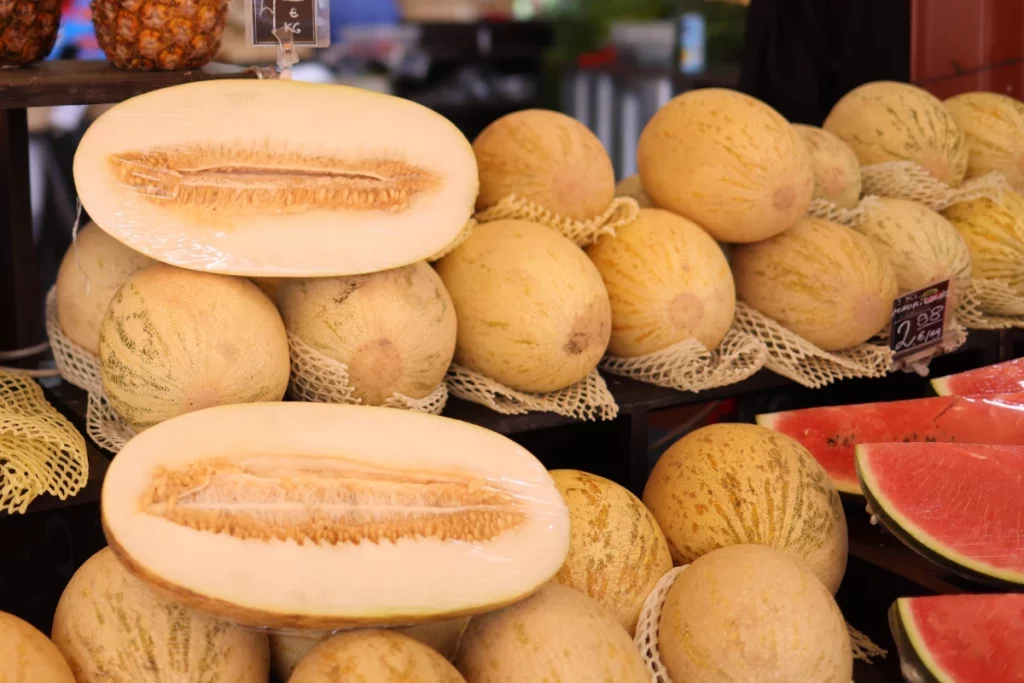
What is a melon allergy?
Melon allergy is an immune-mediated reaction triggered by proteins found in melons — a broad category of fruits in the Cucurbitaceae family that includes cantaloupe, honeydew, watermelon, and a range of specialty varieties including casaba, Crenshaw, Galia, and Persian melon. While melon allergy can occur as a primary food allergy, the majority of melon reactions in adults occur in the context of pollen sensitization — most commonly ragweed or grass pollen allergy — through a cross-reactivity mechanism known as pollen-food allergy syndrome (PFAS).
Melon is one of the foods most consistently associated with ragweed pollen cross-reactivity. The primary ragweed allergen Amb a1 shares structural similarities with proteins in cantaloupe and honeydew in particular, meaning that the immune system of a ragweed-sensitized individual may recognize and react to melon proteins as if they were ragweed pollen. Reactions in this context are typically mild and confined to the mouth and throat — the characteristic pattern of pollen-food allergy syndrome — and tend to worsen during or around ragweed season in late summer and fall when overall allergen burden is highest.
Grass pollen sensitization is a second significant driver of melon cross-reactivity, particularly through profilin — a highly conserved plant protein found in virtually all plant foods that is also present in grass pollen. Profilin-sensitized individuals may react to a wide range of fruits and vegetables including melons, and their reactions tend to be less seasonally restricted than ragweed-driven reactions because grass pollen season spans late spring through early summer rather than fall.
The allergenic proteins in melon include profilins, PR-10 proteins, and in some varieties lipid transfer proteins (LTPs). As with other plant food allergies, the heat stability of the responsible protein determines whether cooking affects reactivity. Profilins and PR-10 proteins are heat-labile and typically destroyed by cooking or processing, meaning canned or cooked melon is often tolerated by individuals who react to fresh melon. LTPs are heat-stable and associated with a higher risk of systemic reactions regardless of preparation.
Melon also belongs to the same Cucurbitaceae botanical family as cucumber, zucchini, squash, and pumpkin, and cross-reactivity within this family is documented. Individuals allergic to melon may also react to cucumber or zucchini, and vice versa.
Symptoms
Melon allergy symptoms vary depending on the allergenic protein responsible and whether the reaction is pollen-driven or represents a primary food allergy.
In pollen-food allergy syndrome (ragweed or grass pollen cross-reactivity):
- Itching or tingling in the mouth, lips, or throat
- Mild swelling of the lips or tongue
- Itchy ears
- Symptoms confined to the mouth and throat
- Rapid onset — typically within minutes of eating
- Usually resolves quickly after swallowing or removing the food
- Fresh melon most commonly implicated — canned or cooked melon usually tolerated
- Symptoms often worse during ragweed season in late summer and fall
In primary melon allergy or LTP-mediated allergy:
- Itching or tingling in the mouth, lips, or throat
- Swelling of the lips, tongue, or face (angioedema)
- Hives
- Skin flushing or rash
- Runny nose or sneezing
- Watery or itchy eyes
- Stomach cramps
- Nausea or vomiting
- Wheezing or difficulty breathing
- Dizziness or lightheadedness
- Anaphylaxis in severe cases
Contact reactions from handling fresh melon — particularly cantaloupe, whose rough skin surface can concentrate allergens — are also reported, presenting as redness and itching on the hands during food preparation.
Melon varieties and relative reactivity
Not all melons carry the same degree of reactivity in sensitized individuals. Cantaloupe and honeydew are the varieties most consistently implicated in ragweed cross-reactivity reactions, while watermelon is also frequently cited. Specialty varieties including Galia, Crenshaw, and Persian melon have been less extensively studied but share the same family of proteins.
Some individuals react to certain melon varieties but tolerate others, reflecting differences in protein concentrations between species. This pattern should be assessed by an allergist rather than used as a self-management guide, as tolerance of one melon variety does not guarantee safety with others.
Foods and pollens that cross-react with melon
Ragweed cross-reactive foods:
- Banana
- Tomato
- Zucchini and cucumber
- Sunflower seeds
- Chamomile tea
- Echinacea
Cucurbitaceae family (botanical cross-reactivity):
Grass pollen cross-reactive foods (profilin):
Pollens:
- Ragweed pollen — primary driver in most US melon allergy cases
- Grass pollen
- Mugwort pollen
Diagnosis
Clinical history
A detailed history is the starting point for melon allergy diagnosis. Your allergist will assess which melon varieties have caused reactions, whether symptoms are confined to the mouth and throat or extend to systemic involvement, whether reactions worsen during ragweed or grass pollen season, and whether other cross-reactive foods have produced similar symptoms. The seasonal pattern of melon reactions is a particularly useful diagnostic indicator — symptoms that are more pronounced in late summer and fall point strongly toward ragweed cross-reactivity.
Skin prick test
A skin prick test can assess sensitization to melon proteins. Fresh melon extract — prepared from cantaloupe, honeydew, or watermelon as relevant to the clinical history — is typically used alongside commercial extracts where available. Simultaneous testing for ragweed, grass pollen, and other cross-reactive foods is performed to map the full sensitization picture.
Blood test
A blood test measuring specific IgE antibodies to melon proteins and to profilin can confirm sensitization and provide information about whether pollen cross-reactivity or primary food sensitization is driving the reaction. Profilin testing is particularly useful in individuals with broad plant food reactivity, as profilin sensitization can explain reactions to a wide range of otherwise seemingly unconnected fruits and vegetables.
Oral food challenge
Where the clinical picture is unclear or where an individual wishes to formally determine whether cooked or processed melon can be safely consumed, an oral food challenge may be recommended under direct medical supervision.
Treatment
Avoidance
The extent of avoidance depends on the allergenic protein responsible and the severity of individual reactions. Individuals with mild pollen-food allergy syndrome reactions confined to the mouth may be able to tolerate cooked or canned melon under allergist guidance. Those with LTP-mediated allergy or a history of systemic reactions require avoidance of melon in all forms.
Melon is not a named major allergen under US food labeling law and will not always be flagged on food labels. Areas requiring particular attention include:
- Fresh melon in fruit salads and mixed platters — a common restaurant and catering item where melon may not be apparent until served
- Freshly pressed and cold-pressed fruit juices containing melon
- Smoothies and blended drinks
- Melon-flavored products including candies, beverages, and desserts which may use real melon extract
- Prosciutto e melone and other dishes where melon is served alongside cured meats
- Spa waters and infused beverages containing melon
Antihistamines
Antihistamines can be given after epinephrine administration to help block the histamine-mediated portion of an allergic reaction. They should not be depended on as a standalone treatment for food allergies. For mild pollen-food allergy syndrome reactions confined to the mouth and throat, antihistamines can provide symptomatic relief but do not address the underlying cross-reactivity.
Allergen immunotherapy
For individuals whose melon reactions are driven by ragweed or grass pollen cross-reactivity, allergen immunotherapy targeting the underlying pollen sensitization may reduce the severity of melon reactions over time. Immunotherapy does not treat the food cross-reactivity directly but can reduce the overall allergic response that drives pollen-food allergy syndrome.
Epinephrine
Individuals with a history of systemic reactions to melon or confirmed LTP sensitization should carry an epinephrine auto-injector (such as an EpiPen, Auvi-Q, or neffy intranasal epinephrine) at all times. Epinephrine is the first-line emergency treatment for anaphylaxis and should be used at the first sign of a severe systemic reaction, followed immediately by calling emergency services.
If you are in the NYC area and have experienced reactions to melon or related foods, our allergists can assess whether pollen cross-reactivity or primary food allergy is driving your symptoms and recommend an appropriate management plan. Book an appointment online or call (212) 686-6321.
Frequently asked questions
Is melon allergy the same as ragweed allergy?
Melon allergy and ragweed allergy are distinct conditions, but they are closely connected in many patients. Ragweed sensitization causes the immune system to produce IgE antibodies against ragweed pollen proteins, and those antibodies can cross-react with structurally similar proteins in cantaloupe, honeydew, and watermelon. The result is melon reactions that are driven by the underlying ragweed allergy rather than primary sensitization to melon itself. Treating the ragweed allergy through immunotherapy can in some cases reduce melon reactivity as well.
Why do my melon symptoms get worse in late summer?
This is a hallmark of ragweed-driven pollen-food allergy syndrome. During ragweed season — which peaks in New York in early to mid-September — overall allergen burden is high and the immune system is in a heightened state of reactivity. Foods that cross-react with ragweed, including melon, tend to produce stronger reactions during this period. Symptoms typically improve once ragweed season ends with the first frost.
Can I eat canned or cooked melon if I react to fresh melon?
Possibly. The proteins most commonly responsible for pollen-food allergy syndrome reactions — profilins and PR-10 proteins — are heat-labile and are degraded by cooking or canning. Many individuals with ragweed or grass pollen-driven melon reactions can tolerate processed or cooked melon without issue. LTP-mediated reactions are not reduced by cooking. Your allergist can help determine which protein is responsible and whether cooked or processed melon is safe for you specifically.
Is watermelon cross-reactive with ragweed in the same way as cantaloupe?
Watermelon is cited as a cross-reactive food in ragweed pollen-food allergy syndrome, though cantaloupe and honeydew are more consistently implicated in the literature. Individual reactivity patterns vary — some patients react to all three, others to only one or two varieties. Targeted skin prick testing with fresh extracts of the specific varieties you have reacted to is the most informative approach.
Could my melon reaction be caused by something other than the melon itself?
Possibly. Melons are frequently consumed alongside other foods — in fruit salads, blended drinks, or as part of restaurant dishes — and identifying melon as the specific trigger requires careful dietary review. Some individuals react to pesticide residues on melon skin rather than the melon proteins themselves, and thorough peeling or washing may reduce this type of reaction. However, any consistent or worsening reaction after melon consumption warrants formal allergy evaluation rather than self-management.
Does melon allergy mean I am allergic to cucumber and zucchini as well?
Not automatically, but cross-reactivity within the Cucurbitaceae family is documented and worth assessing. Individuals who react to melon through primary food sensitization — rather than pollen cross-reactivity — are more likely to also react to cucumber, zucchini, and other cucurbits. Your allergist can test for these foods as part of a comprehensive cucurbit cross-reactivity assessment rather than requiring blanket avoidance of the entire botanical family.