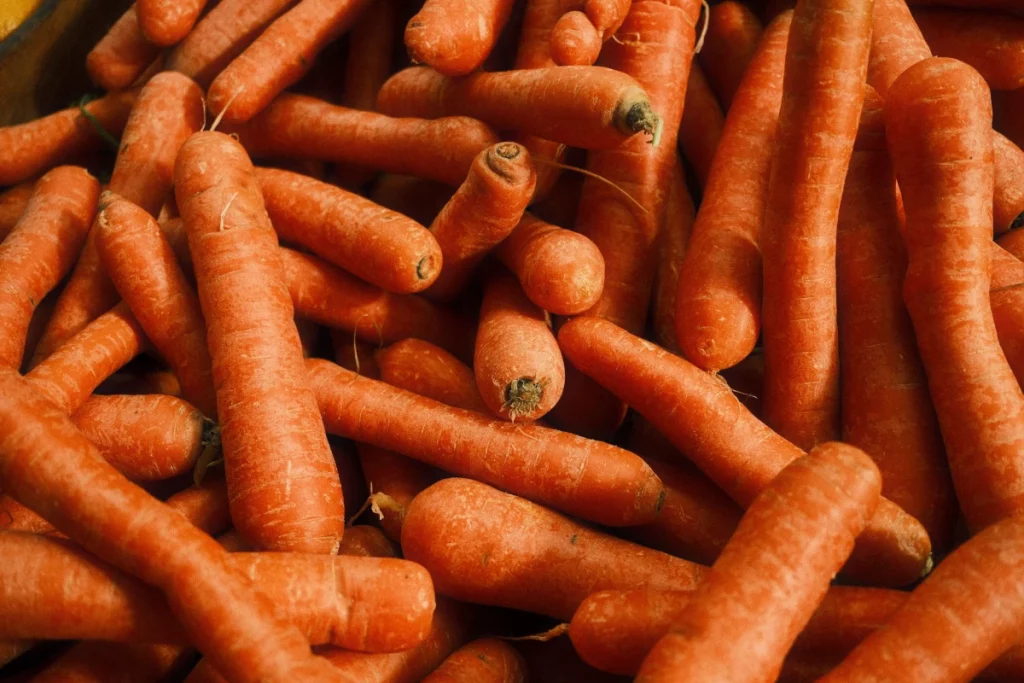
What is a carrot allergy?
Carrot allergy is an immune-mediated reaction triggered by proteins found in carrots (Daucus carota), one of the most widely consumed vegetables in the United States and a staple ingredient across a broad range of cuisines, snack foods, juices, and baby foods. Despite being such a common food, carrot allergy is frequently underrecognized — partly because reactions are often mild and localized, and partly because the condition is so closely tied to pollen sensitization that many individuals do not connect their symptoms to carrot as the trigger.
Carrots belong to the Apiaceae family — also known as the carrot or parsley family — which includes celery, celeriac, parsley, parsnip, fennel, dill, coriander, cumin, caraway, and anise. Cross-reactivity within this family is extensive and is the basis of the celery-carrot-mugwort-spice syndrome, a well-characterized cross-reactivity cluster in which individuals sensitized to mugwort pollen develop reactions to multiple Apiaceae family members alongside a range of culinary spices. Carrot is one of the most consistently implicated foods in this syndrome.
The primary allergenic proteins in carrots include Dau c1, a PR-10 protein closely related to the major birch pollen allergen Bet v1, and Dau c4, a profilin. Both of these proteins are heat-labile — they are degraded by cooking, which is why the majority of carrot-allergic individuals react to raw carrots but can tolerate cooked carrots without issue. This makes carrot allergy one of the more manageable food allergies in terms of dietary flexibility, though the degree of tolerance for cooked carrots varies between individuals and should be formally assessed by an allergist rather than assumed.
A third allergenic protein, Dau c3, is a lipid transfer protein (LTP). LTPs are heat-stable and digestion-resistant, and individuals sensitized to Dau c3 may react to both raw and cooked carrots. LTP-mediated carrot allergy is associated with a higher risk of systemic reactions and requires a more comprehensive avoidance approach than PR-10 or profilin-mediated allergy.
Carrot allergy has one of the strongest associations with birch pollen sensitization of any vegetable. In birch-endemic regions — including the northeastern United States — carrot is one of the foods most frequently reported as a trigger of pollen-food allergy syndrome, alongside apple, peach, hazelnut, and celery. The close structural similarity between Dau c1 and Bet v1 means that birch-sensitized individuals may begin reacting to raw carrots as their birch pollen allergy develops or intensifies, sometimes reporting new-onset carrot symptoms in adulthood.
Symptoms
Carrot allergy symptoms vary depending on the allergenic protein responsible and whether raw or cooked carrot is consumed.
In Dau c1 and Dau c4-mediated allergy (birch pollen and profilin cross-reactivity):
- Itching or tingling in the mouth, lips, or throat
- Mild swelling of the lips or tongue
- Symptoms typically confined to the mouth and throat
- Usually resolves quickly
- Raw carrots most commonly implicated — cooked carrots usually tolerated
In Dau c3-mediated allergy (LTP):
- Itching or tingling in the mouth, lips, or throat
- Swelling of the lips, tongue, or face (angioedema)
- Hives
- Skin flushing or rash
- Stomach cramps
- Nausea or vomiting
- Wheezing or difficulty breathing
- Dizziness or lightheadedness
- Anaphylaxis in severe cases
- Both raw and cooked carrots can trigger reactions
Contact dermatitis from handling raw carrots is occasionally reported, typically presenting as redness and itching on the hands during food preparation.
Carrot juice deserves specific mention as a concentrated source of carrot proteins. Individuals who tolerate small amounts of raw carrot may react to carrot juice due to the higher protein concentration per serving.
Foods and pollens that cross-react with carrot
Apiaceae family (strongest cross-reactivity):
Birch pollen cross-reactive foods:
Pollens:
- Birch pollen (primary driver in most cases)
- Mugwort pollen (celery-carrot-mugwort-spice syndrome)
- Alder pollen
- Hazel pollen
Other cross-reactive foods (variable):
Diagnosis
Clinical history
A detailed history is central to carrot allergy diagnosis. Your allergist will assess whether symptoms occur with raw carrots specifically or with cooked carrots as well, whether carrot juice has triggered reactions, whether there is a background of birch or mugwort pollen sensitization, and whether other Apiaceae family members or birch cross-reactive foods have caused symptoms. A seasonal pattern — worsening of food reactions during birch pollen season in spring, or mugwort season in late summer — can be an important diagnostic clue.
Skin prick test
A skin prick test can assess sensitization to carrot proteins. Fresh carrot extract is often used in testing as it may be more sensitive than commercial extracts for detecting heat-labile protein sensitization. Simultaneous testing for birch pollen, mugwort, celery, fennel, and related Apiaceae spices is typically performed to map the full cross-reactivity picture.
Blood test
A blood test measuring specific IgE antibodies to carrot — and to the component proteins Dau c1, Dau c3, and Dau c4 — can confirm sensitization and provide information about the likely severity of reactions and the role of cooking in managing the allergy. Elevated IgE to Dau c3 indicates LTP sensitization and a higher risk of systemic reactions in both raw and cooked forms.
Oral food challenge
Where the role of cooking in reducing reactivity needs to be formally established, or where test results are ambiguous, an oral food challenge with cooked carrot may be recommended under direct medical supervision.
Treatment
Avoidance
The extent of avoidance depends on the allergenic protein responsible. Individuals with heat-labile protein sensitization may be able to tolerate cooked carrots under allergist guidance, while those with LTP-mediated allergy require avoidance of carrot in all forms. In all cases, raw carrot avoidance is the starting point.
Carrot is not a named major allergen under US food labeling law and will not always be prominently disclosed on food labels. Careful ingredient review is essential, particularly for:
- Raw carrot sticks and crudités — a ubiquitous snack and restaurant accompaniment
- Carrot juice and vegetable juice blends
- Baby foods and purees containing carrot — one of the most common early weaning foods
- Soups, stews, and stocks using carrot as a base ingredient
- Coleslaw and prepared salads
- Mirepoix-based sauces, gravies, and braised dishes
- Carrot cake and baked goods
- Smoothies and cold-pressed juices
- Spice blends containing carrot powder
Antihistamines
Oral antihistamines can be given after epinephrine administration to help block the histamine-mediated portion of an allergic reaction. They should not be depended on as a standalone treatment for food allergies.
Epinephrine
Individuals with LTP-mediated allergy or a history of systemic reactions should carry an epinephrine auto-injector (such as an EpiPen, Auvi-Q, or neffy intranasal epinephrine) at all times. Epinephrine is the first-line emergency treatment for anaphylaxis and should be used at the first sign of a severe systemic reaction, followed immediately by calling emergency services.
If you are in the NYC area and have experienced reactions to raw carrots or related foods, our allergists can assess your sensitization profile and guide you on which forms of carrot and which cross-reactive foods to avoid. Book an appointment online or call (212) 686-6321.
Frequently asked questions
Can I eat cooked carrots if I react to raw carrots?
Possibly. The most common allergenic proteins in carrot — Dau c1 and Dau c4 — are heat-labile and are degraded by cooking, so many individuals with birch pollen-related carrot allergy can tolerate cooked carrots without issue. However, individuals with LTP sensitization (Dau c3) may react to cooked carrots as well. Component-resolved blood testing can identify which protein is responsible, and a supervised oral food challenge can formally confirm cooked carrot tolerance. This should always be assessed by an allergist rather than self-tested at home.
Is carrot allergy related to birch pollen allergy?
Yes, closely. Carrot is one of the foods most strongly associated with birch pollen cross-reactivity. The primary carrot allergen Dau c1 is structurally very similar to Bet v1, the major birch pollen protein, and individuals sensitized to birch pollen frequently develop carrot reactivity as a result. Reactions to raw carrot that worsen during spring birch pollen season are a characteristic presentation of this cross-reactivity.
What is celery-carrot-mugwort-spice syndrome?
It is a cross-reactivity cluster in which individuals sensitized to mugwort pollen — and sometimes birch pollen — develop reactions to celery, carrot, and a range of Apiaceae spices including anise, fennel, coriander, and cumin. Carrot is one of the most consistently implicated foods in this syndrome. If you react to carrots and also notice reactions to celery, spices, or fennel, this pattern is worth discussing with an allergist who can assess the full cross-reactivity picture.
Can babies be allergic to carrots?
Yes. Carrot is one of the most common first weaning foods and early reactions to carrot puree in infants have been reported. Reactions in infants may present as hives around the mouth, vomiting, or distress shortly after eating. Any suspected allergic reaction to a weaning food should be evaluated by a pediatrician or allergist rather than managed through repeated avoidance without a formal diagnosis.
Is carrot juice more likely to cause a reaction than whole carrots?
Yes, potentially. Carrot juice is a concentrated source of carrot proteins and delivers a higher allergen dose per serving than whole or sliced raw carrot. Some individuals who tolerate small amounts of raw carrot may react to carrot juice. This applies particularly to cold-pressed or fresh-squeezed carrot juice, which retains the full protein content of the raw vegetable.
Does carrot allergy mean I am allergic to all root vegetables?
No. Carrot allergy reflects sensitization to specific carrot proteins and does not automatically predict reactivity to all root vegetables. Parsnip, which belongs to the same Apiaceae family as carrot, carries a higher cross-reactivity risk. Other root vegetables such as potato, beetroot, or turnip are from different botanical families and cross-reactivity is less consistently observed. Your allergist can test for specific root vegetables to determine your individual reactivity pattern.