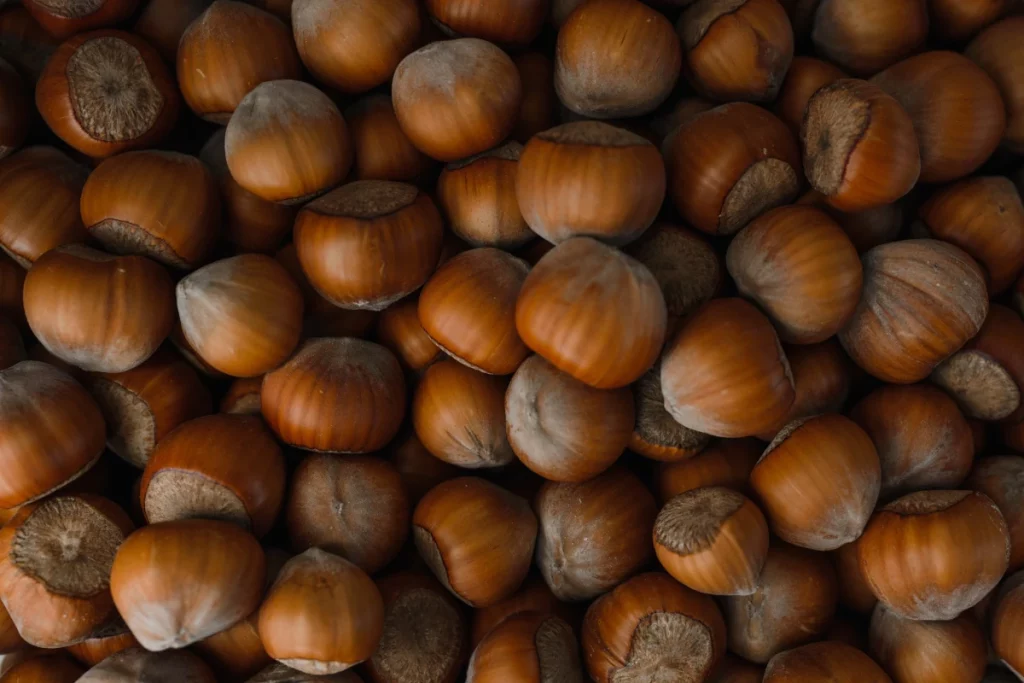
What Is Hazelnut Allergy?
Hazelnut allergy is an immune-mediated reaction that occurs when the body identifies proteins in hazelnuts as harmful and mounts an allergic response. Hazelnuts contain several allergenic proteins, including Cor a1 (a birch pollen homolog), Cor a8 (a lipid transfer protein), Cor a9 and Cor a11 (storage proteins), and Cor a14 (a 2S albumin similar to the major peanut allergen Ara h2). Which protein is driving a person’s reaction has a major effect on how severe symptoms are likely to be.
Reactions to hazelnut generally fall into two categories. The first is primary hazelnut allergy, where sensitization develops directly to hazelnut storage proteins (Cor a9, Cor a11, Cor a14) and reactions tend to be more severe and systemic. The second is pollen-food allergy syndrome, where sensitization to birch pollen (via cross-reactivity with Cor a1) leads to mild, localized oral symptoms when eating raw hazelnuts, often called oral allergy syndrome. Roasted or processed hazelnuts are typically better tolerated by individuals with pollen-driven reactions, since Cor a1 breaks down with heat, while primary storage-protein allergy tends to persist regardless of cooking.
Hazelnut Cross-Reactivity
Birch pollen and other tree pollens:
- Birch pollen — the most clinically significant cross-reactivity, through the Cor a1/Bet v1 protein family
- Alder and hazel tree pollen
Other tree nuts (variable cross-reactivity):
Birch pollen cross-reactive foods (PR-10 mediated):
Individuals sensitized to Cor a14, the hazelnut storage protein most closely related to peanut’s Ara h2, should be evaluated for peanut allergy as well, since co-sensitization is common even though peanuts and tree nuts are botanically unrelated.
Hazelnut Allergy Symptoms
In pollen-food allergy syndrome (typically mild):
- Itching or tingling in the mouth, lips, or throat
- Mild swelling of the lips or tongue
- Symptoms usually confined to the mouth and resolving quickly
- Raw hazelnut most commonly implicated; roasted or baked hazelnut often tolerated
In primary hazelnut allergy (can be systemic):
- Swelling of the lips, tongue, or face (angioedema)
- Hives
- Skin flushing or rash
- Runny nose or sneezing
- Stomach cramps
- Nausea or vomiting
- Wheezing or difficulty breathing
- Dizziness or lightheadedness
- Anaphylaxis in severe cases
Hazelnut is a common hidden ingredient in chocolate spreads, baked goods, coffee flavorings, and liqueurs, which increases the risk of accidental exposure.
Hazelnut Allergy Diagnosis
Clinical history
A detailed history is the starting point for hazelnut allergy diagnosis. Your allergist will ask whether symptoms occur with raw hazelnut only or with roasted and processed hazelnut as well, whether there is a background of birch pollen sensitization, and whether other tree nuts or peanut have caused reactions.
Skin prick test
A skin prick test can assess sensitization to hazelnut. Simultaneous testing for birch pollen and other tree nuts is typically performed to map the full cross-reactivity picture.
Blood test
A blood test measuring specific IgE antibodies to hazelnut, including component-resolved testing for Cor a1, Cor a8, Cor a9, and Cor a14, can help distinguish mild pollen-driven reactions from primary hazelnut allergy with systemic risk.
Oral food challenge
An oral food challenge may be used when test results are ambiguous or when a clearer picture of reaction severity is needed. Given the potential for severe reactions in primary hazelnut allergy, this is always conducted under direct medical supervision.
Hazelnut Allergy Treatment
Avoidance
Strict avoidance of hazelnuts and hazelnut-containing products is the primary management strategy. Hazelnut is a tree nut and falls under major allergen labeling requirements in the US. Areas requiring particular vigilance include:
- Chocolate hazelnut spreads
- Baked goods, cookies, and pastries
- Coffee and dessert flavorings
- Praline and confections
- Liqueurs such as Frangelico
Individuals whose reactions are limited to raw hazelnut in the context of pollen-food allergy syndrome should still confirm tolerance of roasted or processed hazelnut with their allergist before reintroducing it, rather than assuming it is safe.
Antihistamines
Antihistamines can be given after epinephrine administration to help block the histamine-mediated portion of an allergic reaction. They should not be depended on as a standalone treatment for hazelnut allergy.
Epinephrine
Individuals with a history of systemic reactions to hazelnut should carry an epinephrine auto-injector, such as an EpiPen, Auvi-Q, or neffy intranasal epinephrine, at all times. Epinephrine is the first-line emergency treatment for anaphylaxis and should be used at the first sign of a severe reaction, followed immediately by calling emergency services.
If you are in the NYC area and have experienced a reaction to hazelnut, our allergists can determine the type of reaction you have and build a personalized management plan. Book an appointment online or call (212) 686-6321.
Hazelnut Allergy Frequently Asked Questions
Can I eat hazelnut in baked goods if raw hazelnut bothers my mouth?
Not without confirming it with an allergist first. Mild oral symptoms from raw hazelnut usually point to pollen-food allergy syndrome, where roasted or baked hazelnut is often tolerated because heat breaks down the Cor a1 protein responsible. But this should be confirmed through testing or a supervised challenge, not assumed.
Is hazelnut allergy related to peanut allergy?
They can co-occur, but they are not the same thing. Peanuts are legumes and hazelnuts are tree nuts, so they are botanically unrelated. Co-sensitization happens because the hazelnut storage protein Cor a14 shares structural similarity with the major peanut allergen Ara h2.
Why do I react to hazelnut but not other tree nuts?
This depends on which allergenic protein you’re sensitized to. If your reaction is driven by Cor a1, a birch pollen homolog, you may tolerate other tree nuts fine. If it’s driven by storage proteins like Cor a9 or Cor a14, broader tree nut cross-reactivity is more likely. Component testing can clarify this.
How common is hazelnut allergy?
Hazelnut is one of the more common tree nut allergies, particularly in parts of Europe where hazelnut consumption is higher. In birch pollen regions like the northeastern United States, pollen-food allergy syndrome involving hazelnut is especially common.
Can hazelnut allergy be outgrown?
Some children with primary hazelnut allergy do outgrow it, though tree nut allergies are generally more persistent than allergies like milk or egg. Pollen-food allergy syndrome tends to track with pollen sensitization and can fluctuate rather than resolve outright.