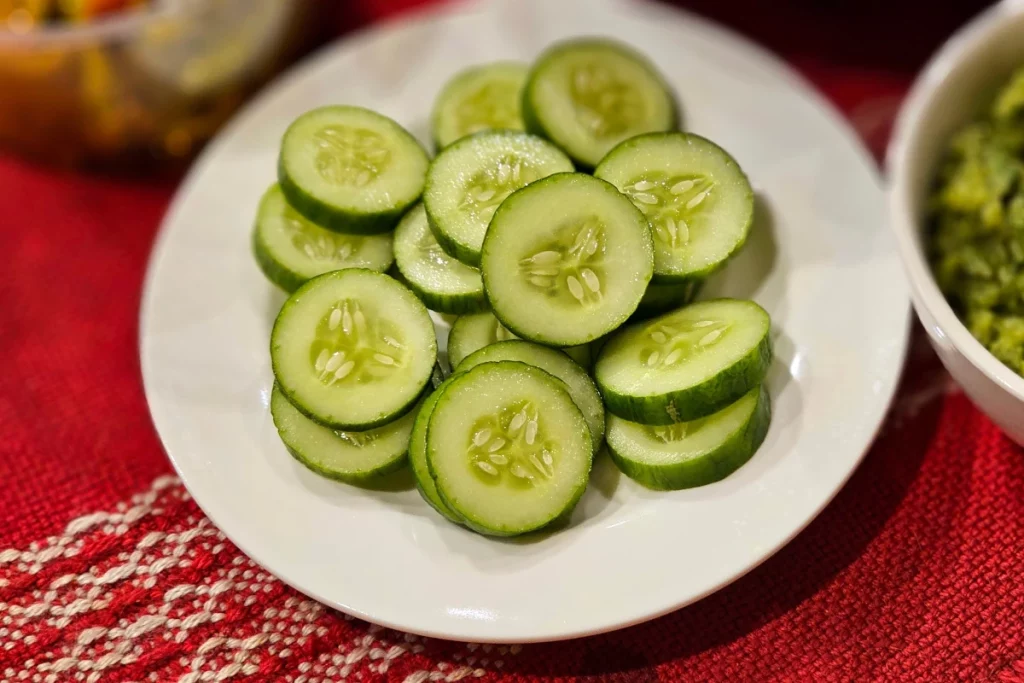
What Is Cucumber Allergy?
Cucumber allergy is an immune-mediated reaction that occurs when the body identifies proteins in cucumber as harmful and mounts an allergic response. Cucumber belongs to the Cucurbitaceae family, along with melon, pumpkin, and squash, and its allergen profile is dominated by profilin, a protein widely shared across unrelated plant foods and pollens. A less common pattern involves a cucumber lipid transfer protein, which carries a higher risk of systemic reactions.
Most cucumber allergy in the northeastern United States is profilin-driven and tied to ragweed pollen sensitization, producing mild oral symptoms as part of a broader pattern of pollen-food allergy syndrome. True primary cucumber allergy, independent of pollen sensitization, is uncommon.
Cucumber Cross-Reactivity
Ragweed pollen and profilin-mediated foods (most common pattern):
- Ragweed pollen
- Melon
- Pumpkin
- Zucchini and other squash
Birch pollen (secondary, profilin overlap):
LTP-mediated cross-reactivity (less common, higher systemic risk):
- Peach
- LTP allergy more broadly
Latex-fruit syndrome:
Cucumber has been reported in some latex-allergic individuals as a lower-frequency member of latex-fruit syndrome, though it is not considered a high-risk food in that cluster the way banana, avocado, or chestnut are.
Profilin sensitization tends to produce widespread but mild cross-reactivity, so a positive test to cucumber in a ragweed-allergic individual does not necessarily mean a clinically significant food allergy is present. This is worth correlating with actual reaction history before recommending avoidance.
Cucumber Allergy Symptoms
Profilin-mediated pollen-food allergy syndrome (most common):
- Itching or tingling in the mouth, lips, or throat
- Mild swelling of the lips or tongue
- Symptoms usually confined to the mouth and resolving quickly
- Raw cucumber most commonly implicated; pickled or cooked cucumber often tolerated
Contact reactions:
- Itching, redness, or hives on the skin after handling raw cucumber, seen occasionally in food service and kitchen settings
LTP-mediated or primary cucumber allergy (less common, can be systemic):
- Swelling of the lips, tongue, or face (angioedema)
- Hives
- Skin flushing or rash
- Stomach cramps
- Nausea or vomiting
- Wheezing or difficulty breathing
- Dizziness or lightheadedness
- Anaphylaxis in rare, severe cases
Cucumber Allergy Diagnosis
Clinical history
A detailed history is the starting point for cucumber allergy diagnosis. Your allergist will ask whether symptoms occur with raw cucumber only or with pickled and cooked cucumber as well, whether there is a background of ragweed pollen sensitization, and whether other Cucurbitaceae foods like melon or pumpkin have caused reactions.
Skin prick test
A skin prick test can assess sensitization to cucumber. Fresh cucumber extract is sometimes used alongside commercial extracts. Simultaneous testing for ragweed pollen and related Cucurbitaceae foods is typically performed.
Blood test
A blood test measuring specific IgE antibodies to cucumber can help confirm sensitization, particularly when skin testing is inconclusive.
Oral food challenge
An oral food challenge may be considered when test results are ambiguous or when it’s unclear whether cooked or pickled cucumber needs to be avoided along with raw. This is always conducted under direct medical supervision.
Cucumber Allergy Treatment
Avoidance
For profilin-mediated pollen-food allergy syndrome, avoidance of raw cucumber is usually sufficient, with pickled or cooked cucumber often tolerated after confirmation with an allergist. For LTP-mediated or primary cucumber allergy, avoidance needs to extend to processed forms, including:
- Pickles and pickled relishes
- Cucumber in salads, sushi, and cold soups like gazpacho
- Cucumber-infused beverages and skincare products, for individuals with contact sensitivity
Antihistamines
Antihistamines can be given after epinephrine administration to help block the histamine-mediated portion of an allergic reaction. They should not be depended on as a standalone treatment for cucumber allergy.
Epinephrine
Individuals with a history of systemic reactions to cucumber should carry an epinephrine auto-injector, such as an EpiPen, Auvi-Q, or neffy intranasal epinephrine, at all times. Epinephrine is the first-line emergency treatment for anaphylaxis and should be used at the first sign of a severe reaction, followed immediately by calling emergency services.
If you are in the NYC area and have experienced a reaction to cucumber, our allergists can determine the type of reaction you have and build a personalized management plan. Book an appointment online or call (212) 686-6321.
Cucumber Allergy Frequently Asked Questions
Can I eat pickles if raw cucumber bothers my mouth?
Often yes, but this should be confirmed with an allergist first. Mild oral symptoms from raw cucumber usually point to profilin-mediated pollen-food allergy syndrome, where the responsible protein breaks down with processing. Pickling and cooking typically reduce this reaction.
Is cucumber allergy related to melon allergy?
They can be related. Both belong to the Cucurbitaceae family and share overlapping profilin-based allergens, and both are commonly linked to ragweed pollen sensitization. Someone who reacts to one may react to the other, though this varies by individual.
Why do my cucumber allergy symptoms get worse in late summer?
This pattern points to profilin-mediated pollen-food allergy syndrome tied to ragweed pollen, which peaks in NYC from August through October. Immune sensitivity to the cross-reactive food protein can feel more pronounced during ragweed season.
How common is cucumber allergy?
Isolated cucumber allergy is uncommon. It’s most frequently seen as part of a broader pattern of ragweed pollen-related food reactions in individuals with seasonal pollen allergies, rather than as a standalone primary food allergy.
Can cucumber allergy be outgrown?
Profilin-mediated reactions to cucumber tend to track with pollen sensitization and can fluctuate over time rather than resolving outright. True primary cucumber allergy is less common and its long-term course is less well studied.